

Pickleball Balls: Complete Buying Guide for 2026
Compare outdoor & indoor pickleball balls by USAPA specs, durability, bounce. Find tournament-approved balls + Sypik paddle pairings. Shop now.

Meta Description: Your complete 2026 guide to pickleball balls — official specs, top brands, tournament standards, and how to match balls to your paddle and play style.
(145 characters)
---
Choosing the right pickleball balls is as consequential as choosing your paddle. Whether you play recreationally on weekends or compete at APP Tour level, ball selection directly shapes your dinking feel, third-shot drop consistency, and overall match performance. This guide covers everything: official USAPA specifications, top-ranked brands, tournament mandates, and expert pairing advice from Champions Sypik athletes competing across Asia and internationally.
---
What Are Pickleball Balls? Official Specifications
A pickleball ball is a hollow, perforated polymer sphere governed by strict dimensional and performance standards set by the USA Pickleball Association (USAPA) and, for international competition, the International Pickleball Federation (ITPF). Understanding the official specifications matters not just for tournament players — knowing the specs helps any player identify quality equipment and avoid substandard balls that degrade faster or play inconsistently.
Diameter: USAPA regulations mandate a diameter of 1.875 to 2.000 inches (approximately 47.6–50.8 mm). This tight tolerance ensures predictable flight paths and consistent bounce behavior across all court types.
Weight: The official weight range is 0.8 to 1.0 ounces (23–28 grams). Balls at the heavier end of this range tend to hold their line better in wind, while lighter balls offer slightly more responsiveness indoors.
Bounce height: When dropped from 78 inches onto a hardcourt surface, a regulation pickleball must bounce between 30 and 36 inches. This standard ensures that power, control, and soft-game techniques all translate predictably across approved balls.
Hole count: Outdoor balls carry exactly 40 holes arranged to optimize aerodynamics in open-air conditions. Indoor balls may have 26 to 40 holes, with larger, fewer holes creating softer flight better suited to enclosed gymnasium acoustics and flooring.
Material: All regulation pickleball balls must be constructed from seamless, smooth, molded polymer — no seams, no surface textures beyond the holes themselves. Color requirements specify that balls must be a single uniform color, though any color is permitted as long as it contrasts clearly with the playing surface.
Certification process: Both the USAPA and ITPF maintain published approved ball lists. Manufacturers submit balls for laboratory testing covering diameter, weight, bounce, and structural integrity before receiving approved status. Only balls on these lists may be used in sanctioned tournaments. You can verify current approvals directly on USAPickleball.org.
---
Outdoor vs. Indoor Pickleball Balls: Key Differences
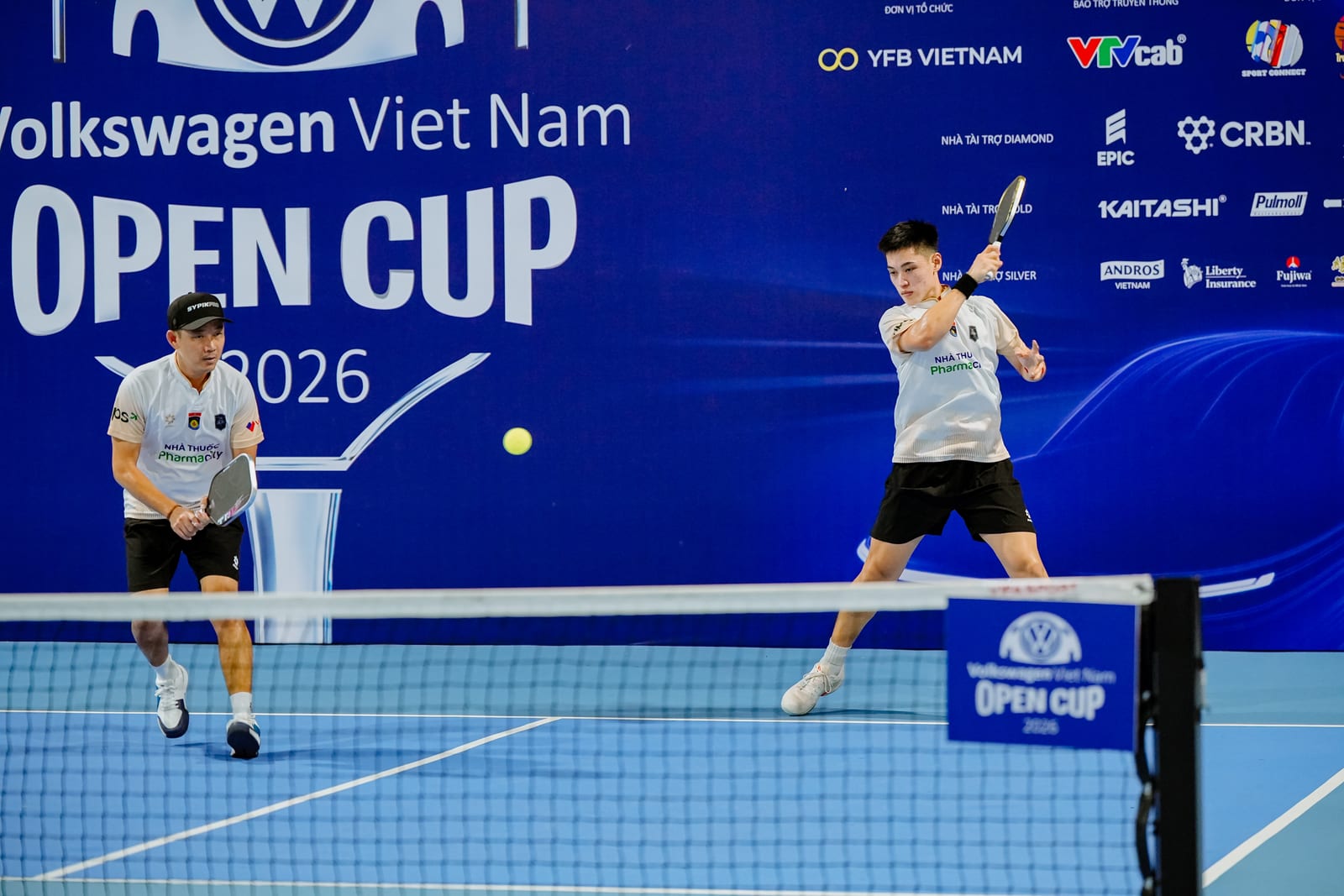 VĐV Sypik tại sân pickleball
The outdoor versus indoor distinction is the single most important buying decision for pickleball balls, yet it is frequently misunderstood by newer players. The differences are not merely cosmetic — they reflect fundamentally different engineering priorities.
Outdoor balls are constructed with a harder, denser polymer shell designed to withstand abrasive surfaces like hardcourt, concrete, and asphalt. They carry the standard 40-hole configuration, which produces slightly slower, more controlled flight in open-air conditions where wind is a variable. The harder material means outdoor balls generate a louder, sharper crack on impact — a sound profile that outdoor park settings can absorb without complaint. The heavier build (closer to 1.0 oz) helps maintain trajectory in crosswinds.
Indoor balls use a softer, more flexible polymer compound that responds better to the lower-friction surfaces of gymnasium wood and sports tile. Their 26 to 40 holes (often fewer and larger than outdoor models) create a faster, floatier flight path that rewards touch-game players. The softer material means noticeably quieter play — a meaningful consideration in shared gymnasium spaces. Weight trends toward the lower end (around 0.8–0.85 oz), which amplifies the feeling of paddle contact and makes spin generation more accessible.
Court surface impact is significant. Using an outdoor ball on a wood gym floor will feel unnaturally bouncy and harsh; using an indoor ball on asphalt will cause rapid deterioration of the softer polymer within just a few sessions, as the rough surface friction and UV exposure degrade it quickly.
Weather resistance separates the two categories sharply. Outdoor balls are formulated to handle UV exposure, temperature swings, and moisture. Indoor balls have no such protection — left in a hot car or exposed to direct sunlight, they will soften, deform, or crack within days.
For skill-level appropriateness: beginners often find indoor balls more forgiving due to their slower, predictable flight. Intermediate and advanced players benefit from outdoor balls that demand more precise mechanics. When you start competing in organized outdoor events, transitioning to outdoor balls full-time is essential for developing tournament-ready technique.
---
Top Pickleball Ball Brands & Models Ranked
The market for regulation pickleball balls has matured significantly entering 2026, with clear leaders emerging across tournament play, recreational use, and value categories.
Franklin Sports X-40
The Franklin Sports X-40 is the gold standard for outdoor tournament play. It is the official ball of the US Open Pickleball Championship and holds USAPA approval for APP Tour events. The 40-hole configuration is precisely engineered for consistency, and the hard polymer construction delivers exceptional bounce uniformity across different hardcourt surfaces. Its predictable flight makes it the reference ball that intermediate and advanced players should train with if they plan to compete outdoors.
Selkirk Pro S1
The Selkirk Pro S1 features a 38-hole design — a deliberate deviation from the standard 40-hole count — engineered for improved aerodynamics and reduced wobble at high speeds. Its crack-resistant polymer compound is among the most durable in the premium outdoor category. Players who prioritize long rallies and consistent ball behavior will appreciate the Pro S1's stability, particularly in windy coastal or elevated-altitude conditions.
Onix Fuse & Onix Pure
The Onix Fuse is the preferred indoor control ball for many advanced players. Its softer polymer construction and optimized hole configuration create superior paddle-to-ball grip, enabling better spin generation on dinks and third-shot drops. The Onix Pure (outdoor) complements the Fuse as a harder-shell alternative for open-air play, offering similar Onix quality in tournament-compliant format.
Vulcan VPRO Flight Gen 2
The Vulcan VPRO Flight Gen 2 holds PPA Tour approval and has been adopted by professional players seeking consistent power transfer and minimal speed loss over a match. Its construction emphasizes ball hardness calibrated to produce a fast, penetrating game style that suits baseline players and power-first strategies.
GoSports GS40
The GoSports GS40 targets the recreational and beginner segment with a USAPA-approved 40-hole design at a price point well below premium models. Durability is lower than top-tier balls — expect 2–4 weeks of casual outdoor use — but for players in the learning phase, the cost-per-session math is very favorable.
Wilson Evolution
The Wilson Evolution brings the brand's sporting goods heritage into pickleball with rigorous durability testing protocols and highly consistent bounce behavior game over game. It is a strong choice for club and recreational programs that need bulk quantities without sacrificing quality.
Cyclotron 6-Pack
The Cyclotron offers a USAPA-approved value option, typically sold in 6-packs that bring per-ball cost to among the lowest in the approved category. Recommended for club settings, group lessons, and practice sessions where ball turnover is high.
Quick Comparison
| Ball | Type | Price (approx.) | Durability | Bounce Consistency | Tournament Approved |
|------|------|-----------------|------------|-------------------|---------------------|
| Franklin X-40 | Outdoor | $15–18 / 3-pk | ★★★★☆ | ★★★★★ | USAPA / APP |
| Selkirk Pro S1 | Outdoor | $18–22 / 3-pk | ★★★★★ | ★★★★☆ | USAPA |
| Onix Fuse | Indoor | $16–20 / 3-pk | ★★★★☆ | ★★★★☆ | USAPA |
| Vulcan VPRO G2 | Outdoor | $20–25 / 3-pk | ★★★★☆ | ★★★★☆ | PPA / USAPA |
| Wilson Evolution | Outdoor | $18–22 / 3-pk | ★★★★★ | ★★★★☆ | USAPA |
| GoSports GS40 | Outdoor | $12–15 / 3-pk | ★★★☆☆ | ★★★☆☆ | USAPA |
| Cyclotron | Outdoor | $14–18 / 6-pk | ★★★☆☆ | ★★★☆☆ | USAPA |
---
Tournament & Championship Ball Standards
 VĐV Sypik tại sân pickleball
Competitive pickleball has well-defined and strictly enforced ball standards that players at every level aspiring to tournament play need to understand.
US Open Pickleball Championship mandates the Franklin Sports X-40 as its exclusive official ball. This is not merely a sponsorship arrangement — the X-40's consistency across thousands of match balls ensures that all competitors face identical flight and bounce conditions. Tournament directors perform random sampling from ball batches before play begins, measuring diameter, weight, and bounce against USAPA tolerance tables.
APP Tour requires USAPA-approved balls across all its sanctioned events, with the Franklin X-40 also serving as the primary ball for most APP events. Ball selection is locked per event and communicated in advance to all registered players so they can train with the correct model beforehand.
PPA Tour authorizes a slightly broader approved list, which includes the Vulcan VPRO Flight Gen 2 alongside other USAPA-certified models. The PPA's professional field has, over time, provided substantial feedback that has shaped manufacturer updates — notably in ball hardness calibration and crack-resistance formulations.
How compliance testing works: tournament officials measure bounce height using calibrated drop protocols on the event's actual court surface, weigh sample balls, and measure diameters with precision calipers. Any ball deviating outside the USAPA tolerance range is removed from play. Manufacturers must resubmit balls for re-approval if they change polymer formulation, hole placement, or mold specifications.
Why this matters for competitive players: training with the exact approved ball for your target tournament is not optional at the advanced level. A player training on softer indoor balls all week, then competing with Franklin X-40 on outdoor hardcourt, will face an adjustment period that costs points. The Champions Sypik competitive roster adjusts training ball selection in the weeks leading up to each specific tour event for precisely this reason.
Using non-approved balls in a sanctioned tournament forfeits the match or results in point penalties — outcomes that no serious competitor can afford.
---
How Ball Choice Impacts Your Game & Paddle Pairing
Ball selection and paddle pairing function as a system. Choosing these elements independently, without considering how they interact, is a common mistake even among intermediate players.
Soft vs. hard ball control tradeoffs: softer indoor balls compress more on contact with the paddle face, creating a longer dwell time that improves control on dinks and drop shots. Harder outdoor balls provide a crisper, faster energy transfer — less margin for touch play, but better response for power groundstrokes and speed-up attacks.
Spin generation is directly affected by ball construction. Softer polymers allow the paddle surface to grip the ball fractionally longer, which translates to more effective topspin and slice. The Onix Fuse and Selkirk Pro S1 are engineered with this in mind, making them favorite choices for spin-dominant players who rely on heavy third-shot drops and angled dinks.
Carbon paddle synergy is where the system becomes particularly important. The SYPIK TRITON 5 PRO ULTIMATE — built with T700 carbon fiber face over PP honeycomb core — features a thinner, more responsive face than glass or composite alternatives. This construction amplifies the feel differences between ball types. Pair the Triton 5 with a medium-hardness outdoor ball like the Franklin X-40 and you get precise, communicative feedback on every contact point. Drop it to a soft indoor ball on the same paddle and the control response becomes even more sensitive — valuable in kitchen line exchanges but requiring an adjustment in reset mechanics.
Professional pickleball player Trương Vinh Hiển, competing with the SYPIK TRITON 5 PRO ULTIMATE, selects ball hardness based on opponent style: against power players, he prefers a slightly softer medium ball that assists reset control; against touch players, the harder Franklin X-40 surface gives his speed-up attacks extra penetration. This level of ball awareness — understanding ball-paddle interaction as a tactical variable — is something every player progressing toward advanced competition should develop.
Dinking feel shifts noticeably between ball types at the kitchen line. Outdoor balls require slightly more precise paddle angle to redirect — the margin for error is tighter. Indoor balls are more forgiving for beginners learning kitchen exchanges, but that forgiveness can mask technique gaps that only reveal themselves when you switch to outdoor competition balls. Browse the full paddle collection at sypik.com/paddles to see how different carbon constructions interact with various ball types.
---
Durability & Longevity: What to Expect
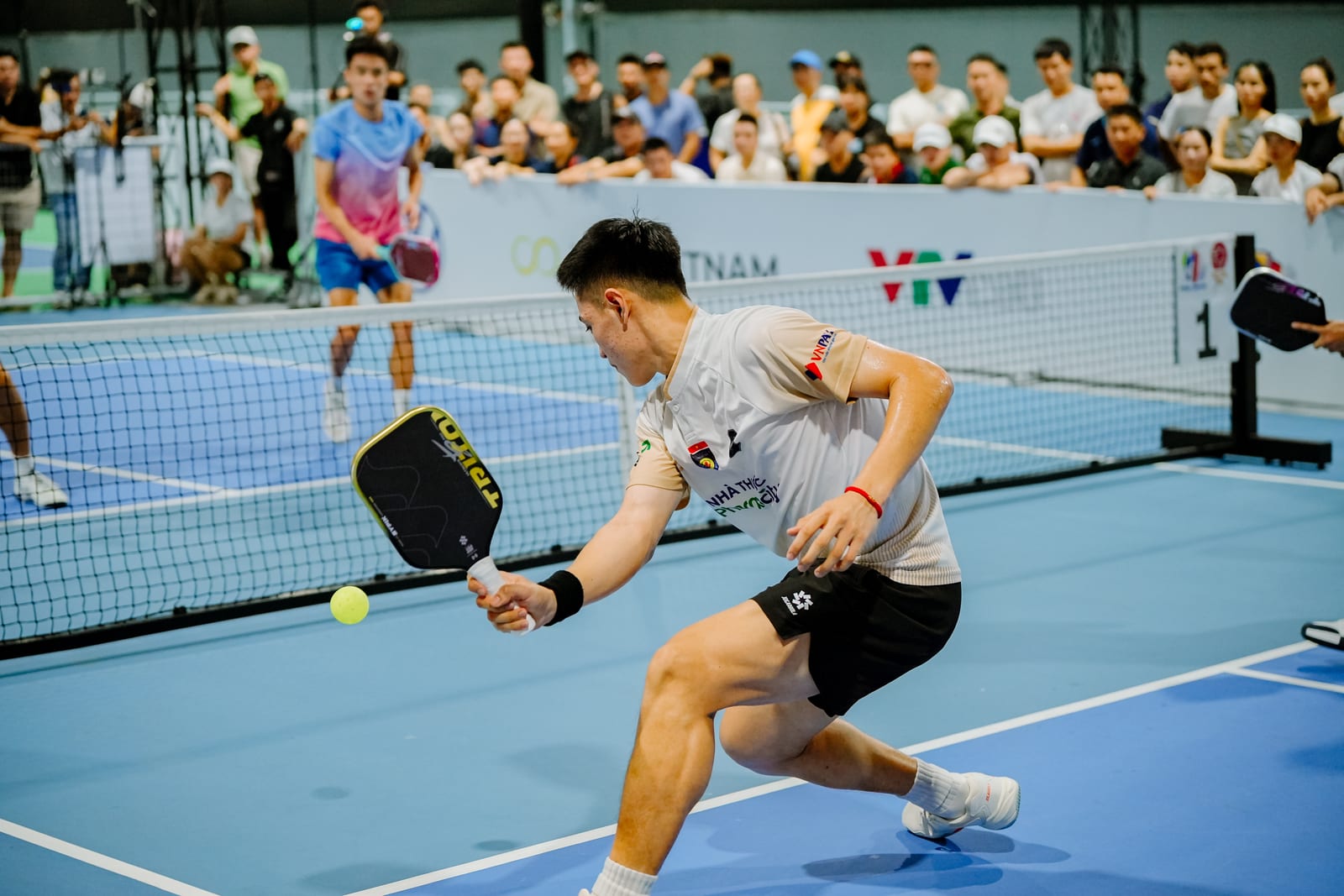 VĐV Sypik tại sân pickleball
Understanding ball lifespan helps you budget accurately and recognize when worn balls are actively harming your game.
Outdoor balls under casual play (2–3 sessions per week on hardcourt) typically last 3 to 8 weeks before performance degrades meaningfully. Tournament-level intensive play compresses this to 1 to 2 weeks, as higher ball speeds and repeated hard surface contact accelerate fatigue.
Indoor balls last significantly longer in controlled indoor environments — expect 2 to 3 months of regular indoor play — but degrade very rapidly if used outdoors. A single outdoor session on rough asphalt can visibly mar an indoor ball's surface.
Primary causes of ball failure:
- UV exposure — direct sunlight breaks down polymer chains, causing brittleness
- Extreme temperature swings — freezing and thawing cycles create micro-fractures
- Court surface friction — rough concrete and asphalt abrade softer polymers quickly
- Repeated high-velocity impacts — compression fatigue accumulates in the polymer matrix
Signs a ball is dead: bounce loss exceeding 10% from baseline, visible surface cracking, deformation that survives 30 seconds of manual pressure, or audible rattling (polymer fragment inside). A dead ball costs you accuracy on every shot — replace it.
Storage best practices: keep balls in a cool, shaded, dry location. Avoid closed vehicles in summer heat. A simple mesh bag in a climate-controlled space extends ball life by 30–40% compared to leaving balls in a bag in direct sun.
Value per use: a premium Franklin X-40 at $5–6 per ball, lasting 6 weeks at 3 sessions per week, delivers roughly $0.30 per session — far better value than a $3 budget ball that cracks after 2 weeks.
---
Beginner vs. Intermediate vs. Advanced Ball Selection
Matching ball type to skill level is not just about cost — it directly affects how efficiently you develop correct technique.
Beginners benefit most from softer indoor balls with 26–40 holes, lower in the approved weight range. The more forgiving flight gives new players time to see the ball, develop tracking instincts, and work on basic mechanics without being punished by hard bounces. Budget indoor options ($15–25 per 3-pack) are perfectly appropriate at this stage. Purchasing tournament-grade hard outdoor balls as a beginner often leads to frustration and develops compensatory mechanics to manage the ball rather than building clean fundamentals.
Intermediate players should transition to outdoor balls — specifically the Franklin X-40 — as they move into club play and organized recreational leagues. This transition trains realistic stroke mechanics, proper weight transfer, and court positioning as they naturally develop at this level. The Franklin X-40's combination of USAPA approval and consistent bounce makes it the ideal intermediate training standard.
Advanced and tournament players require regulation-spec, spin-optimized, and durability-proven balls matching the exact tournament format they compete in. This means knowing your tour's ball specification in advance, training with that model exclusively in the lead-up period, and monitoring individual balls for performance degradation mid-training block.
Junior development angle: the Sypik junior development program — which has produced top Asian Junior Championship performers — stages ball selection as part of athlete development curriculum. Junior players begin with indoor recreational balls at age 10–12, transition to outdoor training balls at 13–14, and move to full tournament specifications at 15+ as they enter competitive junior circuits. This progression ensures technique is built correctly at each stage rather than rushed by equipment that outpaces physical development. Follow the journey of Sypik's junior athletes at sypik.com/champions.
---
Where to Buy & Pricing Comparison
 VĐV Sypik tại sân pickleball
Knowing where to purchase pickleball balls affects both price and access to genuine USAPA-approved products.
Direct brand websites (Franklin Sports, Onix, Selkirk) offer the guarantee of authentic product, occasional bundle deals, and access to the latest model revisions. The tradeoff is higher base pricing and shipping timelines.
Amazon provides the largest selection, competitive pricing on multi-packs, and buyer review data that reflects real-world durability across thousands of users. Look for fulfilled-by-brand listings to avoid counterfeit risk on premium models.
Specialty pickleball retailers — including Pickleball Kitchen and Pickleball Superstore — carry curated selections, knowledgeable staff recommendations, and occasional loyalty program discounts. These are particularly useful for players wanting to trial new models before bulk committing.
Price ranges by tier:
- Budget / recreational: $12–25 per 3-pack (GoSports GS40, Cyclotron)
- Mid-range / club: $18–30 per 3-pack (Franklin X-40, Wilson Evolution)
- Premium / tournament: $30–50 per 6-pack (Selkirk Pro S1, Vulcan VPRO Flight Gen 2)
Bulk buying economies: clubs and league organizers buying 12-pack or 24-pack quantities typically achieve 15–25% per-unit savings versus 3-pack retail pricing. For serious players consuming 2–3 balls per month, buying in bulk reduces annual ball spend meaningfully.
Warranty and return policies vary — most reputable brands offer replacement for manufacturing defects (cracking on first use), but not wear-related failure. Keep purchase receipts for any warranty claim.
---
FAQ: Common Ball Questions Answered
Q: What is the official size of a pickleball ball?
USAPA regulations require a diameter of 1.875 to 2.000 inches (47.6–50.8 mm) and a weight of 0.8 to 1.0 ounces (23–28 grams). The ball must be constructed from seamless, smooth, molded polymer in a single uniform color. These specifications apply to all USAPA-sanctioned tournaments and are mirrored by the ITPF for international competition.
Q: Are Franklin X-40 balls tournament approved?
Yes. The Franklin X-40 is the official ball of USA Pickleball, the APP Tour, and the US Open Pickleball Championship. It holds full USAPA approval and is the most widely mandated tournament ball in North American sanctioned play. If you are training for any major outdoor pickleball tournament, the Franklin X-40 is the single most important ball to practice with consistently.
Q: What's the difference between 40-hole and 26-hole pickleball balls?
40-hole balls are the standard outdoor configuration. Smaller holes distributed evenly across the ball create stable, slightly slower flight in open-air conditions and greater resistance to wind deflection. 26-hole balls (and other low-hole-count indoor designs) feature larger, fewer holes that create a softer, faster flight path optimized for enclosed gymnasium environments. Hole count directly affects aerodynamics, speed, and sound profile — they are not interchangeable across environments.
Q: How long do pickleball balls last?
Under casual play conditions: 3–8 weeks for outdoor balls, 2–3 months for indoor balls. Tournament-level intensive use reduces outdoor ball lifespan to 1–2 weeks due to higher impact forces and abrasive court interaction. Monitor bounce consistency and visible surface condition — a ball losing more than 10% of its standard bounce height should be retired immediately to protect your stroke development.
Q: Can I use indoor pickleball balls outdoors?
Not recommended. Outdoor UV radiation and heat degrade the softer polymer compound in indoor balls rapidly — sometimes within a single session on rough outdoor courts. The surface abrasion of concrete and asphalt also strips indoor ball material far faster than wood gymnasium floors. Always match ball type to court environment: outdoor balls for outdoor surfaces, indoor balls for indoor surfaces.
Q: What makes a pickleball ball crack?
Cracks develop from a combination of UV exposure (photodegrades polymer chains), extreme temperature swings (freeze-thaw micro-fracture cycles), hard court surface friction (surface abrasion weakens wall thickness), and accumulated impact fatigue (polymer stress concentration around hole edges). Storing balls away from direct sunlight and temperature extremes significantly extends lifespan. Never leave balls in a sealed vehicle during summer.
Q: Which pickleball balls have the best spin?
Onix Fuse and Selkirk Pro S1 are consistently rated highest for spin-friendliness. Both use polymer formulations that allow fractionally more paddle-face grip time on contact, amplifying topspin and slice generation. Softer indoor balls generally enable more spin than harder outdoor models — the longer dwell time on the paddle face is the mechanical explanation. Pairing a spin-optimized ball with a carbon-face paddle like the SYPIK AVATAR ULTIMATE PRO TOUR maximizes this effect.
Q: Do professional pickleball players prefer specific ball brands?
Tournament regulations mandate USAPA-approved balls for all sanctioned events — meaning player ball choice is largely determined by tournament specifications. Within approved options, players develop personal preferences based on court conditions, personal game style, and practice feel. At outdoor APP Tour events, the Franklin X-40 is essentially universal. Đỗ Minh Quân, legendary former #1 tennis player of Vietnam and now pickleball champion, aligns his ball training choice to match whatever ball is mandated at his next scheduled tournament, ensuring no adjustment period during competition.
Q: What happens if I use non-USAPA approved balls in a tournament?
Using non-approved balls in a USAPA-sanctioned tournament results in disqualification of affected matches and forfeiture of tournament eligibility. Match results recorded with non-approved equipment will not count toward ranking points. Tournament referees have authority to halt play and require approved replacement balls at any point. Always verify ball approval status on the official USAPA approved ball list before any competitive event.
Q: Should beginners buy expensive pickleball balls?
No. Beginners are best served by softer, forgiving indoor balls in the $15–25 per 3-pack range. At the beginner stage, the priority is building rally consistency, footwork, and basic stroke mechanics — not replicating tournament conditions. Expensive tournament-grade outdoor balls add unnecessary difficulty and wear faster under beginner mechanics. Upgrade to premium outdoor balls once you are consistently rallying 15+ shots and beginning club or league play.
---
Final Recommendation: Matching Balls to Your Paddle & Play Style
After covering specifications, brands, tournament standards, and skill progression, the practical framework simplifies clearly.
For outdoor play, the Franklin Sports X-40 remains the default recommendation for intermediate through advanced players — it is universally approved, consistent, and trains you for the most common tournament conditions you will encounter. The Selkirk Pro S1 is the premium upgrade if crack resistance and aerodynamic stability are priorities for your game.
For indoor play, the Onix Fuse is the top choice for control-oriented players who rely on spin and touch at the kitchen line. The Wilson Evolution suits club programs and players prioritizing durability consistency over multiple months of regular indoor use.
Carbon paddle pairing: the SYPIK TRITON 5 PRO ULTIMATE — constructed with T700 carbon fiber and premium PP honeycomb — is specifically designed to communicate ball feedback with exceptional clarity. Pair it with a medium-hardness outdoor ball (Franklin X-40 is the benchmark) for a setup that provides both responsive control and attack capability. The carbon face amplifies the feel difference between ball types more than composite alternatives — meaning your ball choice matters more, not less, when playing with this paddle.
How Champions Sypik select balls per tournament: Trương Vinh Hiển (22 years old, professional pickleball player and two-time PPA Tour Asia champion) and Đỗ Minh Quân (legendary tennis icon, 42 years old, now pickleball champion) confirm tournament ball specifications upon event registration, then run dedicated training blocks with that specific ball model in the two weeks prior to competition. This eliminates adjustment time and ensures their touch game, particularly third-shot drops and reset mechanics, is fully calibrated to the match ball before they step on court.
Before bulk buying, test a single 3-pack of any new ball model to assess feel compatibility with your paddle and game style. Once you confirm the match, buying in 6-pack or 12-pack quantities delivers meaningful per-unit savings.
Explore the full paddle lineup — and find your optimal ball-paddle pairing — at sypik.com/paddles. If you already own a Sypik paddle, activate your 6-month NFC warranty in 30 seconds at sypik.com/baohanh.
Related Articles

Lưới Pickleball: Hướng Dẫn Chọn & Tiêu Chuẩn Quốc Tế 2026
Hướng dẫn chi tiết lưới pickleball chuẩn ITPF: kích thước, chất liệu, cách lắp đặt và bảo trì. Dùng cho sân thi đấu, giải trí — đánh giá từ Sypik.

Túi Pickleball: Hướng Dẫn Chọn & So Sánh Gear Pro 2025
Hướng dẫn chi tiết cách chọn túi pickleball phù hợp: kích thước, chất liệu, brand top. Đánh giá từ Champions Sypik kèm bảo hành NFC 6 tháng.

Giải Pickleball 2026: Hướng dẫn Toàn Diện Các Giải Đấu Lớn Thế Giới & Việt Nam
Hướng dẫn chi tiết giải pickleball lớn nhất 2026: từ US Open, APP Tour, PPA đến giải Pickleball Việt Nam. Lịch thi đấu, quy tắc & cách tham gia.

Pickleball Ball: Hướng dẫn chọn bóng phù hợp cho mọi tay vợt
Tìm hiểu chi tiết về bóng pickleball: tiêu chuẩn ITPF, sự khác biệt trong nhà vs ngoài trời, cách chọn bóng phù hợp. Lỏng hơn tennis, điều khiển dễ hơn.