

Size Pickleball Court: Official Dimensions & Layout Guide
Learn official pickleball court dimensions, layout, and how to set up your court. Complete guide with specs, comparisons, and pro tips from Sypik Champions.

---
title: "Size Pickleball Court: Official Dimensions & Layout Guide"
meta_description: "Learn the official pickleball court size — 20×44 ft dimensions, kitchen depth, net height, service boxes & how to build a regulation court."
---
Size Pickleball Court: Official Dimensions & Layout Guide
Understanding pickleball court size is the foundation of every strategic decision you make on the court — from serve placement to kitchen positioning to gear selection. Whether you're converting a tennis facility, building from scratch, or simply studying the game at a deeper level, this guide covers every regulation measurement recognized by USA Pickleball, ITPF (International Pickleball Teaching Federation), and IPA (International Pickleball Association).
---
Official Pickleball Court Dimensions Explained
The regulation pickleball court size is 20 feet wide × 44 feet long — identical for both singles and doubles play. Unlike tennis, which uses different court widths for singles (27 ft) and doubles (36 ft), pickleball applies one universal court to both formats. This single-layout rule keeps the game consistent and simplifies facility planning worldwide.
Here is the complete breakdown of official pickleball court measurements:
| Measurement | Specification |
|---|---|
| Court width | 20 feet (6.10 m) |
| Court length | 44 feet (13.41 m) |
| No-volley zone (kitchen) depth | 7 feet from net (each end) |
| Service box depth | 15 feet from net (7.5 ft per side of centerline) |
| Net height at sideline | 36 inches (91.44 cm) |
| Net height at center | 34 inches (86.36 cm) |
Net height is one of the most frequently overlooked specs. At 34 inches at center, the pickleball net is notably lower than a tennis net (36 inches at center), which influences how low-trajectory shots like dinks and third-shot drops behave.
Compared to a tennis court (78 feet × 36 feet for doubles), a pickleball court is roughly 44% shorter and nearly half as wide. That size reduction is not arbitrary — it directly shapes the style of play. With less ground to cover, raw power and baseline domination lose relevance. Instead, precision, soft-game mastery, and net-approach strategy become decisive. Players who understand these pickleball court dimensions early on develop superior court awareness and tactical instincts faster than those who don't.
The service box depth of 15 feet (from net to baseline, split by a centerline into two 7.5-foot-wide boxes per side) defines legal serve trajectories and forces players to serve diagonally — a rule that has downstream effects on rally patterns throughout every point.
---
Understanding the Kitchen (No-Volley Zone)
 VĐV Sypik thi đấu pickleball
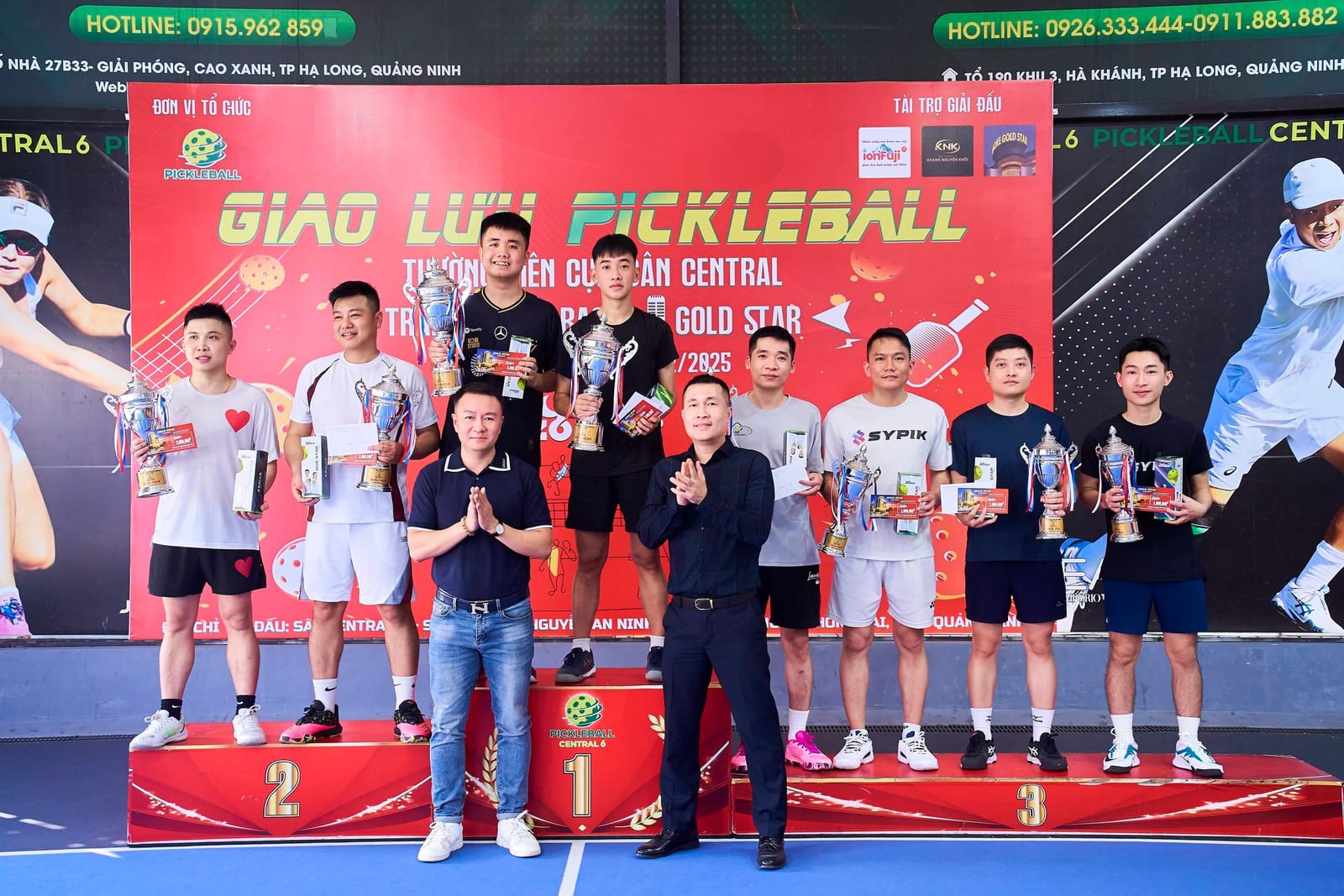
The kitchen — formally the no-volley zone (NVZ) — is a 7-foot-deep rectangular area extending from the net on both ends of the court. It spans the full 20-foot width, covering 7 × 20 = 140 square feet on each side of the net. The kitchen line is the boundary that defines where this zone ends.
Why does the kitchen exist? The rule was designed to prevent players from standing at the net and smashing every ball downward, which would make the game one-dimensional. By prohibiting volleys (balls struck in the air without bouncing) from within this zone, the kitchen forces players to earn net position through movement, angles, and patience. It is fundamentally a strategic design decision embedded in the court dimensions.
Foot fault rules are precise: you may not volley the ball while any part of your body — including momentum after a shot — is touching the kitchen or kitchen line. However, you can step into the kitchen at any time to play a ball that has already bounced inside it. Many beginners misread this rule; the key word is volley. If the ball bounces, you're free to enter.
Kitchen line thickness adheres to the standard 2-inch line-marking width used across all court lines. The kitchen line is part of the no-volley zone — meaning if your foot is on it during a volley attempt, it is a fault.
From a tactical standpoint, the third-shot drop — a soft, arcing shot from the baseline that descends into the opponent's kitchen — exists specifically because of the 7-foot kitchen dimension. The shot forces opponents back from the net and buys the hitting team time to advance. Champions Sypik athletes, including Trương Vinh Hiển and Sophia Huỳnh Trần Ngọc Nhi, have demonstrated how mastering kitchen depth and kitchen-line positioning during competition translates directly into winning rally sequences at the Asian Championships level.
---
Pickleball Court Layout & Line Markings
A complete pickleball court layout consists of the following lines, each with a standard 2-inch width:
- Baselines — the lines at each far end of the court (44 feet apart)
- Sidelines — the two lines running the full 44-foot length (20 feet apart)
- Kitchen lines (NVZ lines) — parallel to the net, 7 feet from it on each side
- Centerline — runs from kitchen line to baseline, dividing the service area into two equal service boxes per side
Service box dimensions: Each service box is 10 feet wide (half the 20-foot court width) and 15 feet deep (from the kitchen line to the baseline). A serve that clips the kitchen line is a fault.
All lines on a regulation court are 2 inches wide. Lines are considered part of the court zone they bound — except for the kitchen line, which as noted, is part of the no-volley zone, not the service area.
Court symmetry is exact: both sides of the net mirror each other perfectly. There is no asymmetry permitted in regulation court layouts recognized by USA Pickleball or ITPF. This symmetry ensures equal strategic conditions for both teams throughout a match, regardless of which end of the court they start on.
Zones that are not marked on the court include any area outside the sidelines and baselines — these are out-of-bounds. Players and officials must recognize these boundaries visually, which is why line color contrast against court surface is part of court certification standards.
---
How Many Pickleball Courts Fit on a Tennis Court?
 VĐV Sypik thi đấu pickleball
A standard tennis court measures 78 feet long × 36 feet wide (doubles court including alleys). The math for converting to pickleball courts is straightforward but requires attention to spacing.
A single pickleball court (20 × 44 feet) fits well within a tennis court's width. The question is whether you have enough length to run courts side-by-side or end-to-end with safe run-off.
The standard answer: 4 pickleball courts can be fitted onto one tennis court when courts are oriented perpendicular to the original tennis baseline. Here is the spatial logic:
- 2 courts side by side: 2 × 20 ft = 40 ft wide (fits within the 78-ft tennis length)
- 2 rows of courts: 2 × 44 ft = 88 ft — which slightly exceeds the tennis court's 78 ft length if no spacing is added
Why spacing matters: without at least 5 feet between courts, players pursuing wide shots risk colliding with players on adjacent courts — a safety and liability issue at any serious facility. Reduced sight-line separation also increases ball confusion mid-rally.
An alternative approach for facilities prioritizing comfort over quantity: 2–3 pickleball courts on one tennis court, with 8–10 feet of run-off on all sides. This layout is preferred for club training environments, junior development programs, and recreational clubs where player experience outweighs maximum court density.
---
Pickleball Court Size Variations: Indoor vs. Outdoor
There is no official size difference between indoor and outdoor pickleball courts. ITPF regulations specify 20 × 44 feet for both formats, and USA Pickleball enforces the same dimensions in tournament play regardless of venue type.
What does differ between indoor and outdoor courts is surface material, and surface matters more than most recreational players realize:
- Concrete: Most common outdoor surface. Durable, low-maintenance, fast play speed. Ball bounces higher and faster on concrete, rewarding aggressive play styles.
- Acrylic coating over concrete: Standard for outdoor club and tournament courts. Cushions impact slightly, improves ball visibility with painted lines, and reduces joint stress.
- Cushioned modular tile (e.g., SnapSports): Common indoors. Absorbs more impact, slows ball speed marginally, and is gentler on knees and ankles — relevant for long training sessions.
- Hardwood gym floor: Used in converted basketball/badminton gyms. Lively bounce, fast surface, excellent for net-game practice.
- Grass: Non-regulation for tournament play. Ball bounce is inconsistent; useful only for casual recreational play.
Court maintenance also diverges by surface type: acrylic outdoor courts require resealing every 3–5 years; modular tiles need periodic leveling and clip inspection; hardwood gym floors need regular refinishing to maintain consistent ball response.
---
Space & Safety: How Much Room Around Your Court?
 VĐV Sypik thi đấu pickleball
The playable court is 20 × 44 feet, but the total space required for safe play is considerably larger. ITPF recommends:
- 10 feet of run-off behind each baseline
- 8 feet of run-off outside each sideline
For professional tournament layouts, the standard expands to 40 × 70 feet per court, accommodating:
- Umpire chair placement at the net post (typically 3–4 feet beyond the sideline)
- Player benches along each baseline (6–8 feet behind baseline)
- Spectator buffer zone beyond benches (additional 4–6 feet)
- Ball retriever positioning at baseline corners
For multi-court facilities, the court-to-court buffer (between adjacent playing areas) should be a minimum of 5 feet, with 8–10 feet preferred. This buffer prevents cross-court interference during simultaneous play and is a safety baseline recognized by facility architects and pickleball governing bodies.
---
Why Court Size Matters for Player Development
The 20 × 44-foot court dimension is not just a regulatory specification — it is the physical constraint that defines pickleball's skill model. Because the court is smaller than a tennis court, there is less distance for the ball to travel, which means:
1. Power is less decisive. A hard drive that would be unreachable on a tennis baseline becomes a manageable reset in pickleball. Raw pace alone does not win rallies.
2. Touch and placement are disproportionately rewarded. Dinking, drop shots, and targeted cross-court angles become the highest-percentage winning strategies.
3. Kitchen control determines match outcomes. Whoever establishes net position — and defends the kitchen line — typically controls the rally. This is the strategic heart of the game.
Junior development programs within the Champions Sypik system build on this reality from day one. Rather than training young athletes to generate pace, the Sypik development philosophy emphasizes court positioning, third-shot drop consistency, and kitchen-line patience. This reflects what coaches like Đỗ Minh Quân — a 10-time Vietnamese tennis national champion who transitioned to pickleball and reached the Top 4 of the Asian Pickleball Championships — have observed: transferring raw speed from tennis to pickleball without adjusting to court geometry produces predictable, beatable patterns.
Sophia Huỳnh Trần Ngọc Nhi, Sypik's youngest pro athlete (born 2007, four-generation tennis family), has demonstrated in Asian Championship doubles play that precise kitchen management within the 7-foot no-volley zone is where points are ultimately won or lost.
For gear selection, court geometry directly informs paddle choice. The compact court rewards paddles with larger sweet spots and controlled power output. The Sypik Avatar Ultimate Pro Tour and Sypik Triton 5 Pro Ultimate are both engineered with the court's geometry in mind — delivering carbon T700 face responsiveness that amplifies touch-game precision over raw smash power.
---
Building & Certifying Your Own Pickleball Court
 VĐV Sypik thi đấu pickleball
Constructing a regulation pickleball court requires precise measurement, proper surface preparation, and adherence to line-marking standards.
Measurement and layout process:
1. Mark a rectangle exactly 20 feet × 44 feet using a steel measuring tape (not a flexible cloth tape, which stretches). Verify diagonal measurements (corner to corner: approximately 48.08 feet) to confirm true square.
2. Mark the net post positions at 22 feet from each baseline, 1–2 feet outside each sideline.
3. Mark the kitchen lines at 7 feet from the net on both sides.
4. Mark the centerline from each kitchen line to the respective baseline.
Line marking standards:
- All lines must be 2 inches wide.
- Use sport-grade acrylic paint or thermoplastic tape rated for the surface material.
- For outdoor courts, reflective paint improves line visibility under artificial lighting.
- Line color must contrast clearly with court surface (white or yellow lines on green/blue surfaces are most common).
Surface costs vary significantly: poured concrete is the most economical long-term investment ($8,000–$15,000 USD for a single court), while cushioned tile systems may reach $20,000–$30,000 installed. Maintenance schedules — annual line repainting, surface resealing every 3–5 years, net hardware inspection — should be built into facility operating budgets from day one.
---
FAQ: Common Pickleball Court Size Questions
Q: What is the official size of a pickleball court?
The official regulation pickleball court size is 20 feet wide × 44 feet long. This applies to both singles and doubles play and is the standard recognized by USA Pickleball, ITPF (International Pickleball Teaching Federation), and the IPA (International Pickleball Association). The total playing area is 880 square feet.
Q: How deep is the kitchen in pickleball?
The kitchen (no-volley zone) is 7 feet deep from the net on each end of the court. It spans the full 20-foot width of the court, creating a 140-square-foot zone on each side. The 7-foot measurement was established to prevent net-camping and force players to develop soft-game skills.
Q: How many pickleball courts fit on one tennis court?
Approximately 4 regulation pickleball courts can fit on a standard tennis court (78 × 36 feet). Courts are typically oriented perpendicular to the original tennis baseline, arranged in a 2×2 grid. For broader run-off spacing, 2–3 pickleball courts with more generous safety margins is the preferred configuration for club facilities.
Q: What is the net height in pickleball?
The pickleball net is 36 inches (91.44 cm) at the sideline and 34 inches (86.36 cm) at the center. The center of the net sags slightly lower, which is why low cross-court dinks and middle-of-the-net third-shot drops are among the highest-percentage shots in the game.
Q: What is the service box size in pickleball?
Each service box is 10 feet wide × 15 feet deep — measured from the kitchen line to the baseline (15 feet) and from the sideline to the centerline (10 feet). Serves must land diagonally in the opposite service box. A serve that lands in the kitchen or on the kitchen line is a fault.
Q: Can you play pickleball on a court smaller than regulation size?
Recreational play is possible on non-standard surfaces, but tournament and official play requires the regulation 20 × 44-foot layout. Courts below regulation size are not sanctioned by USA Pickleball, ITPF, or IPA for competitive play. For training purposes, smaller courts can be useful for specific drills, but developing match-ready instincts requires regulation dimensions.
Q: How much total space do you need for a pickleball court with run-off area?
The minimum recommended footprint is 30 feet wide × 60 feet long, which includes 10 feet of run-off behind each baseline and 5 feet outside each sideline. Professional tournament standard is 40 × 70 feet per court, which incorporates umpire chair placement, player benches, and spectator clearance zones.
Q: Is the pickleball court size the same indoors and outdoors?
Yes. ITPF regulations specify 20 × 44 feet for both indoor and outdoor courts — there is no size variation between formats. Surface material, ball type (indoor vs. outdoor ball with different hole counts), and lighting conditions differ, but court geometry is identical.
Q: Why is the pickleball court smaller than a tennis court?
The smaller court dimensions were an intentional design choice to emphasize placement, dinking, net control, and soft-game strategy over raw power and athletic range. The compact 20 × 44-foot layout makes the kitchen and net position the decisive battleground in every rally, rewarding tactical intelligence over pure pace.
Q: What is the centerline on a pickleball court?
The centerline divides each side of the court into two equal service boxes, running from the kitchen line to the baseline. It is 15 feet long and 2 inches wide. Serves must land in the diagonally opposite service box across the net — landing on the centerline itself is considered a valid, in-bounds serve.
---
Get Court-Ready: Choosing the Right Gear for Regulation Play
On a 20 × 44-foot court where touch governs outcomes, paddle selection is a technical decision, not a cosmetic one. The geometry of the court — specifically the 7-foot kitchen and the compact 44-foot length — rewards paddles with responsive face control, manageable power output, and predictable spin behavior across soft shots and resets.
The SYPIK TRITON 5 PRO ULTIMATE is built precisely for this environment. Its carbon T700 face combined with a PP honeycomb core delivers the kind of low-vibration, high-response touch that dinking and third-shot drops demand. There is no excess power that punishes mishit volleys near the kitchen — just controlled, coachable feedback on every contact. The paddle's weight balance suits the quick-exchange nature of kitchen-zone rallies, where paddle head speed and precision matter more than brute force.
The SYPIK AVATAR ULTIMATE PRO TOUR offers an alternative profile for players who prioritize maneuverability and cross-court angle generation — the two skills court geometry rewards most. Browse the full Sypik paddle collection to compare specs for your specific game style.
The Champions Sypik athletes — Trương Vinh Hiển, Đỗ Minh Quân, and Sophia Huỳnh Trần Ngọc Nhi — train and compete on regulation 20 × 44-foot courts, and their gear selection reflects court reality rather than marketing. Their results at the Asian Pickleball Championships and PPA Tour Asia validate the equipment choices.
Complete your court setup with the Áo Sypik Pro Tour for tournament-ready apparel that moves with the quick lateral transitions that kitchen positioning demands. When you're ready to compete on regulation courts with gear built for their exact dimensions, explore your options at sypik.com/paddles — and activate your 6-month NFC warranty at sypik.com/baohanh within 30 seconds of opening the box.
Related Articles

Lưới Pickleball: Hướng Dẫn Chọn & Tiêu Chuẩn Quốc Tế 2026
Hướng dẫn chi tiết lưới pickleball chuẩn ITPF: kích thước, chất liệu, cách lắp đặt và bảo trì. Dùng cho sân thi đấu, giải trí — đánh giá từ Sypik.

Túi Pickleball: Hướng Dẫn Chọn & So Sánh Gear Pro 2025
Hướng dẫn chi tiết cách chọn túi pickleball phù hợp: kích thước, chất liệu, brand top. Đánh giá từ Champions Sypik kèm bảo hành NFC 6 tháng.

Giải Pickleball 2026: Hướng dẫn Toàn Diện Các Giải Đấu Lớn Thế Giới & Việt Nam
Hướng dẫn chi tiết giải pickleball lớn nhất 2026: từ US Open, APP Tour, PPA đến giải Pickleball Việt Nam. Lịch thi đấu, quy tắc & cách tham gia.

Pickleball Ball: Hướng dẫn chọn bóng phù hợp cho mọi tay vợt
Tìm hiểu chi tiết về bóng pickleball: tiêu chuẩn ITPF, sự khác biệt trong nhà vs ngoài trời, cách chọn bóng phù hợp. Lỏng hơn tennis, điều khiển dễ hơn.