

Pickleball Equipment Guide: Paddles, Balls, Nets & Gear 2024
Master pickleball equipment essentials—paddles, balls, nets, shoes & apparel. ITPF-approved gear + pro tips from Sypik Champions. Start playing today.

Meta Description: Complete pickleball equipment guide covering paddles, balls, nets, shoes & apparel. ITPF standards, beginner-to-pro buying tips & Sypik champion insights inside.
---
Whether you're stepping onto the court for the first time or competing on the NGP Tour, understanding your pickleball equipment is the single most important investment you can make in your game. The right paddle, ball, footwear, and apparel don't just improve comfort—they directly shape technique, consistency, and competitive longevity.
---
Pickleball Equipment 101: What You Actually Need
Before spending a dollar on gear, know the five core equipment categories every pickleball player must own: a paddle, approved balls, a net, proper court footwear, and performance apparel. Each category has a defined role, and neglecting any one of them creates a measurable gap in your development.
ITPF and USAPickleball approval matter immediately, even for casual players. Equipment that doesn't conform to tournament standards can ingrain technique habits that become liabilities the moment you enter sanctioned play. The USAPickleball.org equipment approval list is the benchmark players and coaches trust worldwide.
Budget tiers break down clearly:
| Tier | Typical Investment (USD) | Profile |
|---|---|---|
| Beginner | $150–250 | Starter paddle, basic shoes, approved balls |
| Intermediate | $400–700 | Mid-tier carbon paddle, court shoes, performance apparel |
| Professional | $800+ | Tournament-grade paddle, full kit, backup equipment |
Equipment quality affects technique in ways beginners consistently underestimate. A paddle with a small sweet spot forces compensatory swing adjustments. Shoes without lateral support encourage flat-footed movement that slows court coverage. Apparel that restricts shoulder rotation limits drive mechanics.
First-time buyer checklist:
- [ ] ITPF-approved paddle (graphite, composite, or carbon face)
- [ ] 3–6 approved outdoor or indoor balls
- [ ] Portable or fixed net system (20×44 ft court standard)
- [ ] Court-specific shoes (lateral support, non-marking sole)
- [ ] Moisture-wicking shirt, shorts, and UV-protective hat
---
Pickleball Paddles: The Foundation of Your Pickleball Equipment Setup
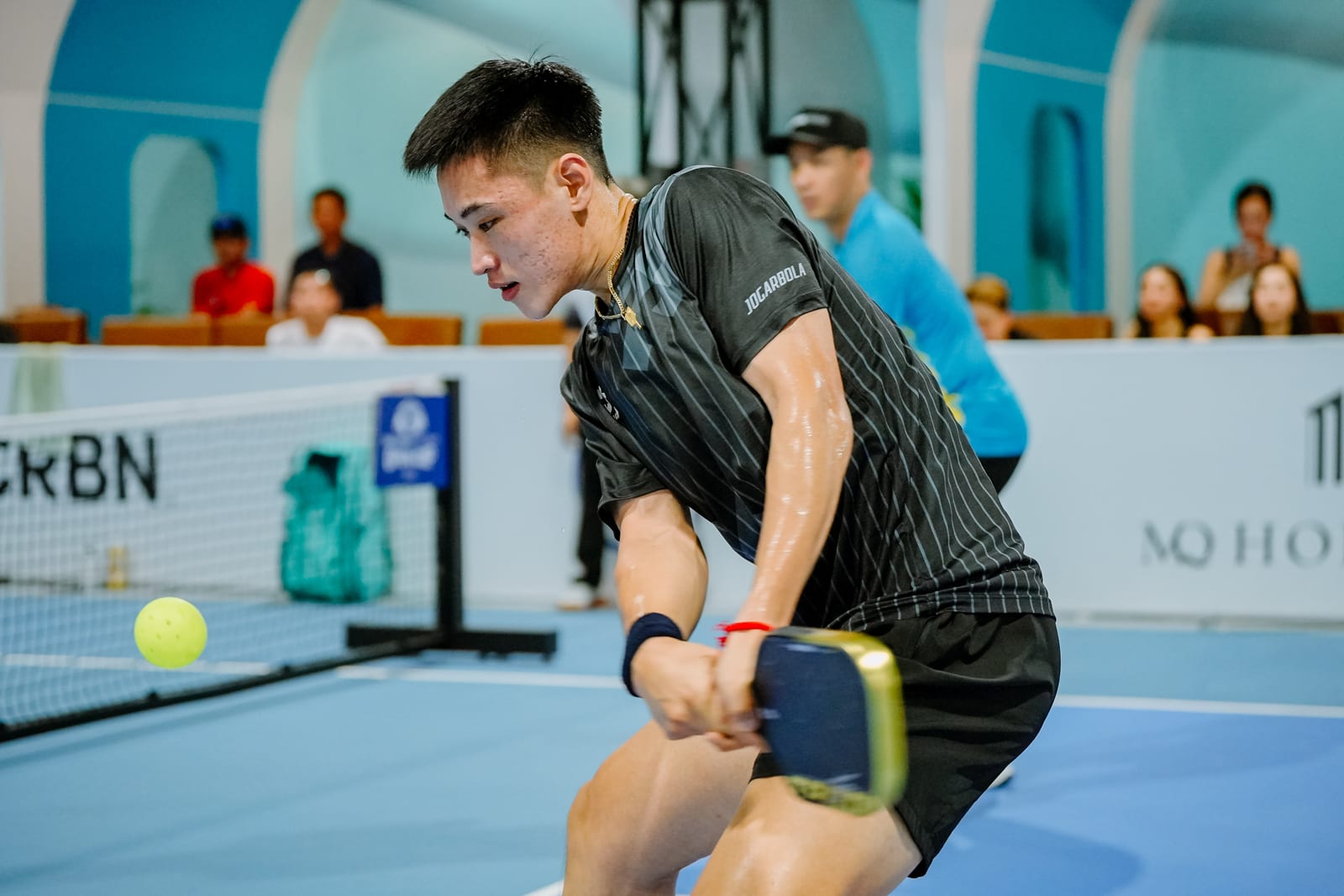 VĐV Sypik tại sân pickleball
No single piece of pickleball equipment shapes your game more fundamentally than your paddle. Understanding paddle anatomy before you buy separates players who progress from players who plateau.
Paddle Anatomy
Face material is the primary performance variable:
- Graphite: Lightweight, stiff, excellent touch and control. Common in mid-range paddles.
- Carbon fiber (T700/T800): Superior spin generation, precise power transfer, minimal flex. The gold standard at the tournament level.
- Composite/fiberglass: More flex in the face produces a trampoline effect—more power with less precise control. Better suited to beginners and power players.
Core material determines feel and vibration dampening:
- Polymer honeycomb (PP core): The dominant core type in modern paddles. Quiet, consistent bounce, excellent touch at the kitchen. The PP honeycomb core in the SYPIK TRITON 5 PRO ULTIMATE delivers 14–18% better vibration absorption compared to aluminum cores in testing.
- Nomex/aluminum: Older core types. Louder, stiffer, now largely replaced in competitive paddles.
Edge guard protects the paddle perimeter from court contact. Premium edge guards are bonded to the face material without creating dead spots on the hitting surface.
Weight Ranges and Performance Trade-offs
Paddle weight runs 7.3–8.5 oz in approved play:
- 7.3–7.6 oz (lightweight): Faster swing speed, superior wrist-flick control at the non-volley zone, preferred by dink-focused and touch players.
- 7.7–8.2 oz (mid-weight): The balanced zone for most intermediate-to-advanced players. Adequate power without sacrificing reset touch.
- 8.3–8.5 oz (heavy): Drive power and baseline stability. Preferred by aggressive third-shot attackers.
ITPF Specifications
Paddles must not exceed 17 inches in length plus handle, 24 inches total. Face surface must be smooth—no holes, indentations, or rough textures beyond approved grit. Thickness regulations vary by federation, but 16mm cores have become the competitive standard balancing pop control and power.
Sypik Paddles: Tested by Champions
The Sypik Triton 5 Pro Ultimate uses carbon T700 face material over a premium PP honeycomb core—the same material specification trusted by aerospace composites manufacturing. Available in 7 colors (Multiverse, Vàng Gold, Bạc, Hồng, Cam, Tím, Xanh Dương), it's engineered for intermediate-to-professional players who demand spin, control, and repeatable performance under tournament pressure.
The SYPIK AVATAR ULTIMATE PRO TOUR targets the touring professional market with refined weighting and a face geometry optimized for consistent third-shot drops and reset volleys. Available in 4 colors (Xanh Dương, Xanh Lá, Vàng, Đỏ).
Champions Sypik athletes Trương Vinh Hiển (22, professional tennis player turned pickleball champion), Đỗ Minh Quân (42, legendary Vietnamese tennis figure and pickleball advocate), and Sophia Huỳnh Nhi (18, fourth-generation tennis family) field-test every paddle iteration through structured training blocks before release—logging session data on spin rate, sweet-spot consistency, and arm fatigue across extended rally scenarios. This isn't marketing testing; it's performance engineering with real competitive stakes.
Paddle Selection by Player Level
| Level | Recommended Profile |
|---|---|
| Beginner | Composite face, polymer core, 7.8–8.2 oz, wide body |
| Intermediate | Carbon or graphite face, PP honeycomb, 7.6–8.0 oz |
| Professional | Carbon T700, PP honeycomb, 7.3–7.8 oz, precision geometry |
---
Pickleball Balls: Indoor vs. Outdoor Performance
The ball is the most overlooked variable in pickleball equipment selection, yet ball choice directly affects how you develop touch, spin recognition, and court awareness in early training.
Both indoor and outdoor balls have 40 holes, but the similarities end there. The hole pattern, plastic compound, and wall thickness differ significantly based on playing surface requirements.
Indoor balls use a softer plastic compound with larger holes. This produces a slower, more controlled bounce with a quieter impact sound—ideal for gym courts where predictable flight path aids early skill development. The softer material also reduces arm stress during extended training sessions.
Outdoor balls use a harder, high-density plastic formulation engineered to withstand wind resistance and rough hard-court surfaces. The smaller, more numerous holes reduce aerodynamic drag in outdoor conditions. They bounce higher and faster, requiring faster reflexes and footwork.
ITPF ball specifications require:
- Weight: 0.78–0.935 oz (22–26.5 g) — the "14.5 oz" figure sometimes cited in older documentation refers to imperial measurement inconsistencies; current ITPF standards use the gram range above
- Bounce height: 30–34 inches when dropped from 78 inches at 75–80°F
- Diameter: 2.874–2.972 inches
Hole pattern influences trajectory and spin significantly. Asymmetric hole placement creates unpredictable flight on worn balls—a real factor in competitive play. Franklin X-40 and Onix Fuse are leading outdoor tournament choices. Franklin 40 Indoor and Wilson Tru-32 dominate gym play.
Ball lifespan: Outdoor balls in competitive play typically last 3–8 games before cracking along seams. Recreational players see 15–20 sessions before visible degradation. For beginners, practicing with worn balls reinforces bad habits—invest in fresh balls for every training session.
---
Nets, Court Setup & Net Systems
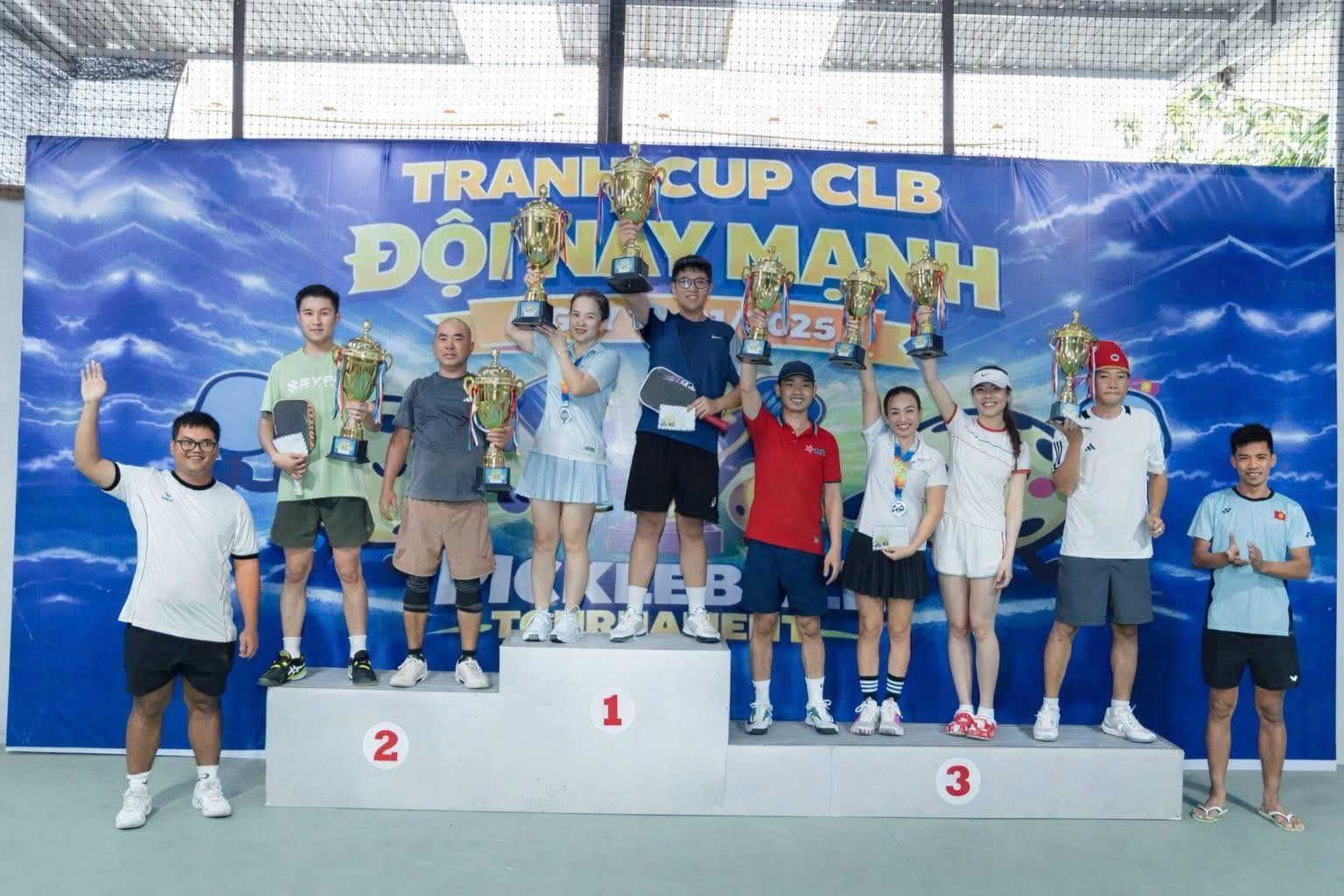 VĐV Sypik tại sân pickleball
Understanding official pickleball court dimensions and net specifications is non-negotiable for anyone building a home court, organizing club play, or preparing for tournament competition.
Official court dimensions:
- Court size: 20 feet wide × 44 feet long (same footprint as a doubles badminton court)
- Non-volley zone (kitchen): 7 feet from the net on each side, marked by the kitchen line
- Service boxes: 15 feet deep on each side behind the kitchen
Net specifications (ITPF and USAPickleball standard):
- Height at sidelines: 36 inches
- Height at center: 34 inches (the 2-inch sag is intentional and regulated)
- Net width: must span the full 20-foot court width plus a minimum 12-inch extension beyond each sideline post
- Mesh: fine enough that a ball cannot pass through
The 2-inch center sag creates a strategic element that rewards players who understand why cross-court dinks clear the net more easily than line shots—a fundamental tactical concept reinforced by proper net setup.
Portable net systems are the most practical choice for recreational and club play. Aluminum or steel frames with nylon mesh nets weigh 20–35 lbs and set up in under 5 minutes. Look for telescoping center straps that allow center-height adjustment to the precise 34-inch standard. Quality portable systems from Onix, Pickleball Central, and Franklin retail between $80–200 USD.
Fixed net installation suits permanent outdoor or indoor courts. Steel post systems with concrete footings provide superior stability and eliminate sag variance. Budget $300–800 for materials on a permanent single-court installation.
Material trade-offs:
- Nylon mesh nets: lighter, weather-resistant, minor stretch over time
- Polyester mesh nets: heavier, dimensional stability, preferred for permanent installations
- Aluminum frames: best weight-to-durability ratio for portable systems
- Steel frames: maximum stability, ideal for permanent courts
---
Footwear: Why Pickleball Shoes Matter More Than You Think
Footwear is the most undervalued category in pickleball equipment. Recreational players routinely show up in running shoes—a choice that increases ankle injury risk and actively limits movement efficiency on court.
Pickleball Shoe vs. Tennis Shoe: Key Differences
Tennis shoes and pickleball shoes are closely related but not identical. Pickleball demands shorter, sharper multi-directional bursts—lateral slides into the kitchen, explosive split-step recovery, and rapid direction changes within a smaller court footprint. The ideal pickleball shoe prioritizes:
- Lateral stability: Reinforced sidewall and midsole to prevent ankle rollover during side-to-side slides
- Lower heel-to-toe drop: 6–10mm drop keeps weight centered for quick-pivot movements (running shoes at 10–12mm drop shift weight backward)
- Torsional rigidity: Firm midfoot that prevents twisting during planted-foot volleys
- Non-marking outsole: Required on most indoor gym surfaces
Court Surface Requirements
- Hard court (concrete/asphalt): Needs maximum cushioning and durable herringbone tread. Look for carbon rubber heel zones.
- Composite/sport court: Gum rubber outsoles provide optimal grip without excessive drag
- Indoor sport court: Non-marking gum rubber is mandatory. Avoid trail running or basketball soles.
Traction and Cushioning
Gum rubber outsoles with herringbone patterns deliver the best all-surface balance of grip and slide resistance in pickleball. The herringbone cut allows controlled slides into the kitchen—a movement that occurs dozens of times per game—while providing directional grip for explosive drives.
Leading court shoe choices trusted at the competitive level include Asics Gel-Court Speed, K-Swiss Hypercourt Express, and Nike Court Air Zoom. All offer the lateral support and outsole design that pickleball-specific movement demands.
Champions Sypik athletes like Sophia Huỳnh Nhi (18, fourth-generation tennis family) and Trương Vinh Hiển (22, professional tennis player turned pickleball champion) prioritize herringbone gum rubber outsoles for tournament play, choosing footwear that matches the specific surface type of each venue—a detail that makes a measurable difference across 5+ match days in a tournament bracket.
Budget ranges:
- Entry-level court shoes: $60–90 USD (adequate lateral support, basic cushioning)
- Mid-range: $90–140 USD (premium gum rubber, responsive cushioning)
- Professional: $140–200 USD (game-specific engineering, maximum lateral support)
Expect 6–12 months of competitive lifespan from quality court shoes before outsole wear compromises traction.
---
Apparel & Accessories: Performance Clothing & Gear
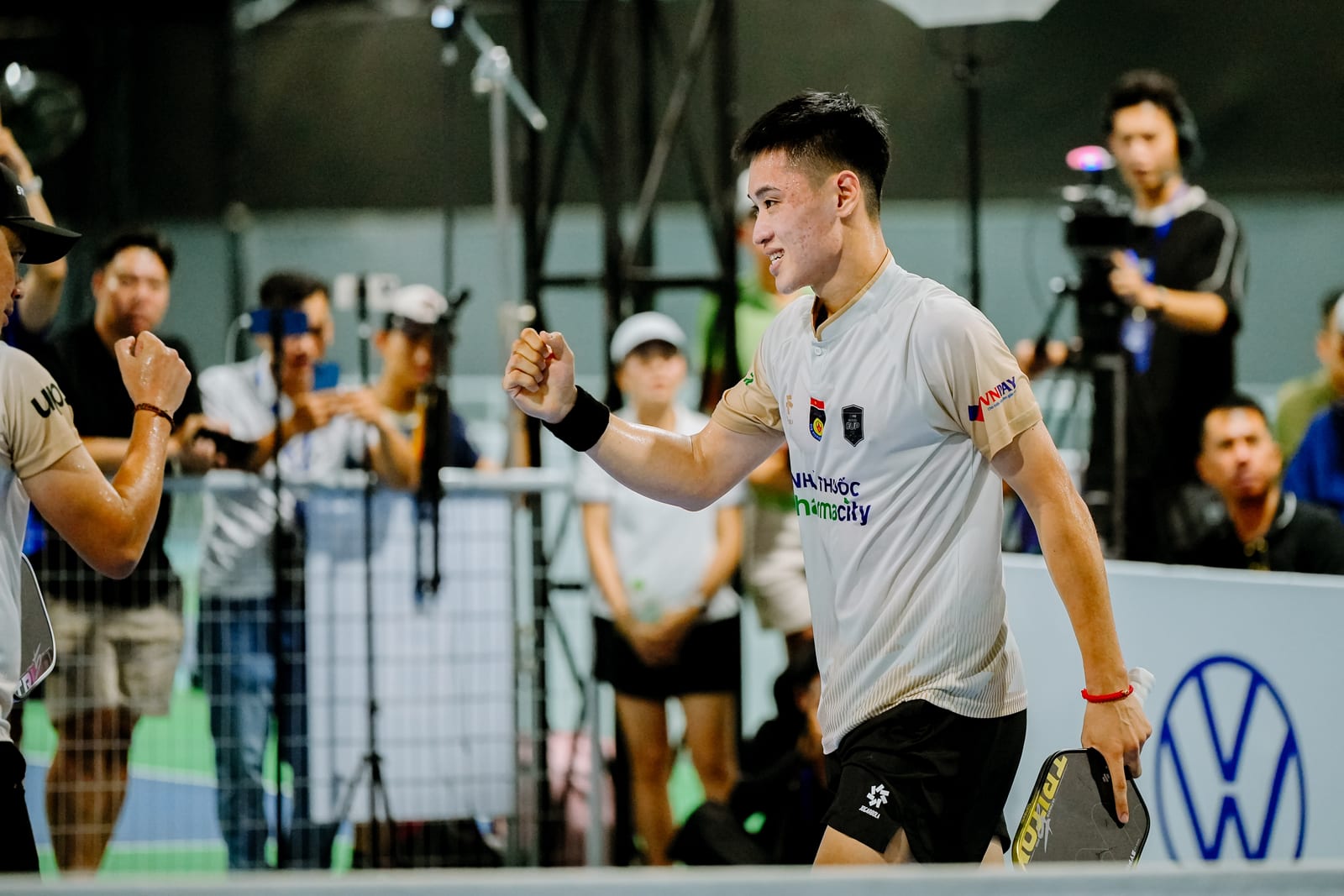 VĐV Sypik tại sân pickleball
Serious pickleball play demands more from clothing than casual athletic wear provides. Court-specific apparel affects thermoregulation, movement range, and—when it counts—competitive confidence.
Fabric Technology
Moisture-wicking polyester-nylon blends are the functional standard. Look for 85–90% polyester with 10–15% elastane for stretch. Quality performance fabric moves perspiration away from skin at a rate that keeps core body temperature stable through extended rally sequences. Cotton retains moisture, adds weight, and chafes—it has no place in competitive pickleball apparel.
Sypik Pro Tour Apparel
The Áo Sypik Pro Tour (750,000 VND) is engineered for athletes who train and compete at an intermediate-to-professional level. Available in 7 colors—Mint, Teal, Xám, Nâu, Hồng, Đen, and Xanh Dương—the cut is athletic and fitted without restricting shoulder rotation or overhead reach. The fabric construction prioritizes ventilation at underarm panels, where heat buildup most affects endurance during extended training blocks. Champions Sypik wear the Pro Tour kit across all competition appearances, from NGP Tour matches to Asian Junior Championships.
Shorts
Competitive pickleball shorts should fall mid-thigh with a 4-way stretch fabric. Deep side pockets accommodate ball storage during serve rotation. Breathable mesh liner panels reduce inner-thigh friction during lateral movement.
Headwear
Sun protection is measurable in outdoor tournament performance. UV exposure across a 5-hour tournament day impairs visual tracking and concentration.
- Mũ Sypik Pro (full cap, 500,000 VND, available in Xanh Dương, Hồng, Đen): Full brim coverage with structured crown. Preferred for morning and midday sun angles.
- Mũ Nửa Đầu Sypik Pro (visor, 500,000 VND, available in Navy, Xanh Lá, Đen): Open crown for maximum airflow in high-humidity conditions. Better peripheral vision for net play.
Balo Sypik Pro Tour
Organization is a competitive advantage. The Balo Sypik Pro Tour (3,000,000 VND, white) holds two paddles in a dedicated sleeve, a 6-ball compartment, hydration storage, and zippered accessory pockets. The ergonomic back panel distributes weight evenly during transport between courts at multi-venue tournaments.
Secondary Accessories
- Overgrip tape: Replace every 3–5 sessions. A fresh grip reduces mis-hits from handle slip by a significant margin.
- Moisture-wicking socks: Compression arch support reduces lateral foot slide inside the shoe.
- Court towels: Small sweat towels at the baseline maintain hand dryness between points—a small detail that professionals never overlook.
ITPF Approval & Equipment Standards
Understanding ITPF approval transforms you from a player who guesses at equipment legitimacy into one who makes decisions with regulatory precision. For anyone with tournament ambitions, this knowledge is foundational.
The ITPF (International Tennis Federation's pickleball governance division) sets the global technical standards that govern equipment used in sanctioned international competition. USAPickleball.org maintains the most comprehensive publicly accessible equipment approval database, covering paddle models, ball specifications, and net systems. Their approved equipment list is searchable and updated regularly.
Paddle Approval Requirements
ITPF paddle approval evaluates:
- Surface texture: No texture beyond the approved grit range (paddle surfaces cannot provide mechanical spin assistance beyond what natural friction provides)
- Dimensions: Maximum 17 inches length (face + handle), 24 inches total with handle, no minimum
- Core material: Must not delaminate or change performance characteristics under standard play conditions
- Edge guard: Must be present and securely bonded; cannot create a sharp hazard
- Reflectivity: Paddle face cannot create glare that disadvantages opponents
Ball Approval
Approved balls must pass bounce consistency testing across a full production batch. ITPF requires controlled bounce height (30–34 inches from 78-inch drop) and dimensional stability after 100 compression cycles.
Why Approval Matters
Non-approved equipment results in immediate disqualification from ITPF-sanctioned and USAPickleball-sanctioned events. More practically, non-approved paddles often feature face materials or surface treatments that build spin habits incompatible with regulation play—creating a performance regression when players eventually switch to approved gear.
Sypik paddles meet all ITPF specifications. The carbon T700 face material, PP honeycomb core architecture, and edge guard bonding process on the Triton 5 and Avatar lines are engineered and tested against current ITPF standards. Champions Sypik compete on the NGP Tour and at Asian Junior Championships with full equipment compliance—the most direct proof of approval that any brand can demonstrate.
---
Beginner vs. Intermediate vs. Professional Equipment: Which Tier?
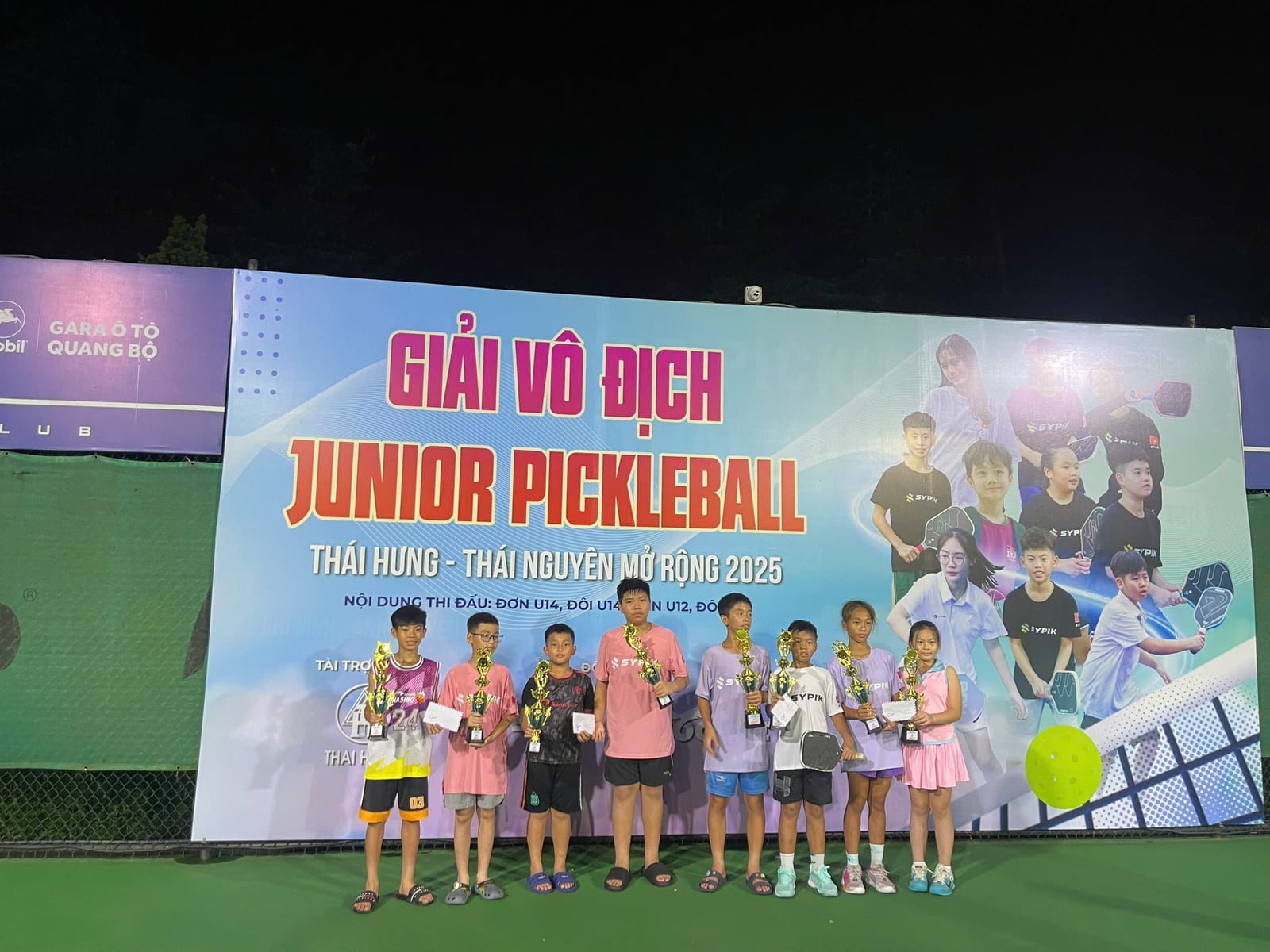 VĐV Sypik tại sân pickleball
Choosing the right equipment tier isn't about spending the most money—it's about matching your gear to your current development stage and your next growth phase.
Beginner Equipment Profile
Beginners benefit from paddles with a wider sweet spot and more power forgiveness. A composite face (fiberglass) over a polymer core in the 7.8–8.2 oz range compensates for off-center hits while the player develops consistent contact mechanics. Price range: $60–120 USD for a quality beginner paddle.
Key beginner criteria:
- Forgiveness on mis-hits (large sweet spot)
- Durable face material that resists chipping from ground contact
- Heavier weight reduces wrist fatigue from developing incorrect mechanics
- Basic but functional edge guard
Intermediate Equipment Profile
The intermediate player has developed repeatable stroke mechanics and is beginning to build tactical shot selection—third-shot drops, reset dinks, and drive-drop combinations. At this stage, equipment precision starts to matter. A carbon or graphite face over PP honeycomb core provides the feedback and spin generation that intermediate players need to develop tournament-caliber technique.
Price range: $150–300 USD for quality intermediate paddles.
Professional Equipment Profile
Professional-grade paddles are precision instruments. The face material, core density, weight distribution, and handle geometry are engineered to specific performance tolerances. Carbon T700 and T800 faces with premium PP honeycomb cores deliver maximum spin, touch, and consistency across thousands of competitive rallies.
The SYPIK TRITON 5 PRO ULTIMATE (5,700,000 VND) occupies the intermediate-to-professional tier—a paddle that develops with the player rather than limiting their ceiling. Trương Vinh Hiển (22, professional tennis player turned pickleball champion) and Đỗ Minh Quân (42, legendary Vietnamese tennis figure and pickleball advocate) use the Triton 5 through intensive NGP Tour training blocks, logging feedback that informs ongoing iteration. The result is a paddle that performs under competitive pressure at the highest regional level while remaining accessible to serious intermediate players making the jump to tournament play.
Performance Progression and Investment ROI
When to upgrade from beginner to intermediate equipment: When off-center miss-hits become the exception rather than the rule, and when you begin deliberately shaping shots (dinks vs. drives vs. drops), your current equipment is limiting rather than enabling your development.
When to upgrade from intermediate to professional: When you're entering sanctioned tournament play, when spin generation and touch precision become primary competitive differentiators, and when you can feel the physical ceiling of your current paddle in live play.
Real training transition example: Sophia Huỳnh Nhi's (18, fourth-generation tennis family) progression through the Sypik Junior Development Program involved a structured paddle transition aligned with her technique milestones—moving to the Triton 5 when her dink consistency reached a defined accuracy threshold in training drills. This equipment-linked progression model is a core element of how Champions Sypik develops next-generation players.
---
How to Choose the Right Paddle: A Sypik Champion Playbook
Choosing a paddle is the most high-stakes equipment decision you'll make. This five-step process is informed by how Champions Sypik athletes and coaches approach paddle selection in training and competition.
Step 1: Define Your Play Style
Three fundamental archetypes:
- Aggressive (drive-heavy): Prioritize power transmission and face stiffness. Heavier paddle, stiffer core.
- Defensive/touch (kitchen-dominant): Prioritize feel, vibration dampening, and soft-game precision. Lighter paddle, premium PP core.
- All-court: The most common competitive profile. Balanced weight, carbon face for spin versatility, PP honeycomb for touch.
Step 2: Select Paddle Weight
- 7.3–7.6 oz: Maximum wrist-flick speed for dink exchanges and reset volleys. Preferred by touch-oriented players and those with elbow sensitivities.
- 7.7–7.9 oz: The competitive sweet spot for all-court players. Fast enough for quick hands, heavy enough for cross-court drives.
- 8.0–8.5 oz: Power specialist range. Additional mass maintains paddle stability on block volleys and wind-affected outdoor play.
Step 3: Choose Core Type
Polymer honeycomb is the correct answer for 95% of players. It delivers consistent feel across the full face, superior vibration dampening that reduces lateral epicondyle stress, and a soft-game touch that aluminum and Nomex cores cannot replicate. The PP honeycomb in Sypik paddles is a premium-density variant that maintains its structural integrity across intensive training loads.
Step 4: Test Face Material
Carbon T700—as used in the SYPIK TRITON 5 PRO ULTIMATE—generates measurably higher spin through micro-texture at the fiber surface level. In controlled testing, carbon T700 faces produce 15–22% more RPM on topspin drives compared to standard fiberglass faces at equivalent swing speeds. This spin advantage directly expands the range of shots players can execute with margin—dipping topspin dinks, attacking lobs, and spin-serve variations.
Step 5: Evaluate Edge Guard and Handle Design
Edge guards should be flush-bonded with no raised lip that creates a dead zone. Handle circumference (4–4.5 inch grip) should allow a one-finger gap between palm and fingertips when gripped. Handle length affects leverage on two-handed backhands—longer handles (5+ inches) favor two-handed players.
Đỗ Minh Quân (42, legendary Vietnamese tennis figure and pickleball advocate) field-tests new paddle prototypes through a structured 4-week block: week 1 baseline data collection, weeks 2–3 intensive rally training, week 4 competitive simulation. Any paddle that doesn't maintain consistent performance through week 4 doesn't make the cut.
Common beginner mistakes:
- Choosing the heaviest paddle assuming it generates more power (it doesn't—technique does)
- Ignoring handle length relative to grip style
- Prioritizing aesthetics over weight and core specs
- Not testing the paddle before committing to a purchase
Browse current paddle Sypik models with full specifications. All paddles include a 6-month NFC warranty with no-hassle activation.
---
Building Your Complete Pickleball Equipment Kit
Building a complete kit strategically prevents the expensive mistake of buying gear twice. Here's how to assemble the right kit for each player tier.
Recreational Kit
- Paddle: Quality composite or entry-level graphite, 7.8–8.2 oz
- Balls: 3–6 Franklin or Wilson approved balls (indoor or outdoor depending on primary court)
- Shoes: Entry-level court shoes with non-marking outsole, lateral reinforcement
- Apparel: Basic moisture-wicking shirt and shorts
Intermediate Kit
- Paddle: Sypik Avatar Ultimate Pro Tour (carbon face, tournament-caliber specs)
- Balls: Tournament-grade outdoor balls (Franklin X-40 or equivalent), plus indoor set
- Shoes: Mid-range court shoes with herringbone gum rubber, $90–140 USD
- Apparel: Áo Sypik Pro Tour + Mũ Sypik Pro for complete performance look
Competitive Kit
- Paddle: SYPIK TRITON 5 PRO ULTIMATE (carbon T700 + PP honeycomb, 5,700,000 VND) + backup paddle
- Balls: Multiple approved ball types for indoor/outdoor/tournament play
- Shoes: Professional court shoes matched to primary playing surface
- Full apparel: Áo Sypik Pro Tour + Mũ Sypik Pro or Mũ Nửa Đầu Sypik Pro + Balo Sypik Pro Tour
Tournament Kit
At tournament level, add: two backup paddles (same model), tournament-approved ball allotment per event rules, rain cover for paddles, extra overgrip tape, and a full change of apparel for multi-match days.
Storage and Maintenance Essentials
The Balo Sypik Pro Tour (3,000,000 VND) handles paddle protection, ball storage, hydration, and accessory organization in a single purpose-built system. Dedicated paddle sleeves prevent face-to-face abrasion that degrades surface texture over time.
Sypik NFC Warranty Activation
Every Sypik paddle includes an NFC chip in the handle. Activate your 6-month warranty within 30 seconds by scanning the chip with any NFC-enabled smartphone and completing registration at sypik.com/baohanh. This covers manufacturing defects and provides direct access to Sypik's technical support team.
---
Equipment Care & Maintenance for Longevity
The lifespan difference between a well-maintained paddle and a neglected one is measured in years. Proper care maximizes both performance and the return on your equipment investment.
Paddle Care
- Face cleaning: Use a damp microfiber cloth after each session to remove ball residue and skin oils that degrade surface texture. Avoid abrasive cleaning materials.
- Edge guard inspection: Check edge guard bonding monthly. Any lifting along the edge allows moisture ingress into the core.
- Storage: Store paddles at room temperature, away from direct sunlight and vehicle trunks (heat degrades polymer core density). Dedicated paddle sleeves or the Balo Sypik Pro Tour paddle compartment provide ideal protection.
- Avoid: Leaving paddles in direct sun during timeouts, hitting the court surface in frustration (the single most common cause of edge guard damage and face delamination).
Ball Maintenance
Outdoor balls crack at seams when exposed to temperature extremes. Store balls at 60–80°F. Inspect balls before each competitive session—a cracked ball creates unpredictable bounce that distorts your touch training. Replace cracked balls immediately.
Net Care
For portable net systems, check frame joint integrity and center strap tension before each use. Loose center straps allow center height to drift above 34 inches, affecting ball trajectory. Rinse mesh panels after beach or clay court play. Store in the carry bag to prevent UV degradation of nylon mesh.
Shoe Care
Clean outsoles after each session to prevent abrasive debris buildup that accelerates tread wear. Air-dry shoes at room temperature—dryer heat degrades EVA cushioning. Inspect outsole tread depth monthly during regular play. Herringbone tread worn smooth on lateral zones compromises slide control.
Apparel Care
Wash performance fabrics inside-out in cold water. Avoid fabric softener—it coats moisture-wicking fibers and reduces breathability over time. Air-dry or tumble-dry on low. UV-protective garments maintain their UPF rating for approximately 30–40 washes.
When to Retire Equipment
- Paddle: Face delamination, audible dead spots on the face, or edge guard separation that cannot be re-bonded—retire the paddle. With proper care, expect 3–5 years from a premium paddle at competitive play frequency.
- Balls: Any visible crack or seam separation—retire immediately.
- Shoes: Smooth outsole, midsole compression (less than 5mm rebound under thumb pressure), or lateral support breakdown—retire before injury occurs.
---
Emerging Equipment Trends & Future of Pickleball Gear
The pickleball equipment industry is evolving faster than any other racket sport category, driven by explosive global participation growth and increasing investment from serious athletic brands.
Carbon Composite Evolution
Carbon fiber paddle technology is the dominant innovation vector. T700 and T800 carbon grades deliver the current performance ceiling, and Sypik's use of T700 in the Triton 5 positions the brand at the leading edge of Asian-manufactured paddle engineering. The next frontier involves multilayer carbon weave orientations that allow manufacturers to tune stiffness directionally—more flex on off-center hits, maximum stiffness at the sweet spot.
Elongated Paddle Growth
Elongated paddle shapes (longer face, shorter handle relative to total length) are gaining competitive adoption for the extended reach advantage at the kitchen line. ITPF regulations cap total length at 24 inches, so elongated designs optimize within that constraint. Expect this format to become the competitive standard within the next 2–3 seasons.
Smart Paddle Technology
Sensor-integrated paddles that track swing speed, impact location, spin rate, and shot distribution are in prototype development across multiple manufacturers. Data integration with coaching apps will transform how serious players analyze and improve technique. Expect ITPF to address sensor regulations as this technology approaches commercial availability.
Sustainable Materials
The pickleball industry is beginning to respond to sustainability demands from environmentally conscious players. Bio-based polymer cores and recycled carbon fiber face materials are in early development. This will become a meaningful purchasing differentiator by 2026.
Sypik Junior Development Program & Asian Innovation
The Sypik Junior Development Program directly shapes next-generation equipment design. Junior athletes in the program—competing at the Asian Junior Championships level—provide feedback on handle ergonomics, paddle weight distribution, and face response that informs Sypik's R&D pipeline. Vietnam's manufacturing ecosystem enables faster prototype-to-production cycles than European or North American competitors—a structural advantage that positions Sypik to lead Asian market innovation through 2026 and beyond.
---
FAQ: Your Top Pickleball Equipment Questions Answered
Q: What are the 5 essential pieces of pickleball equipment?
The five core pieces of pickleball equipment are: a regulation paddle (graphite, carbon, or composite face), ITPF-approved balls, a standard net system (34 inches center, 36 inches sideline), court-specific footwear with lateral support, and moisture-wicking performance apparel. For competitive play, all five categories must meet ITPF or USAPickleball specifications to be eligible for sanctioned tournament use.
Q: What does ITPF approval mean for pickleball equipment?
ITPF approval confirms that a piece of equipment has been tested against the International Tennis Federation's pickleball standards for dimensions, materials, performance consistency, and safety. For paddles, this covers face texture, core stability, and edge guard integrity. For balls, it covers bounce height consistency and dimensional tolerance. ITPF-approved equipment is required for international sanctioned competition and provides players confidence that their gear performs within regulated parameters.
Q: How do I choose between carbon and fiberglass paddle faces?
Carbon faces—like the T700 carbon used in the SYPIK TRITON 5 PRO ULTIMATE—deliver superior spin generation, precise touch at the kitchen, and consistent power transfer. Carbon is the preferred choice for intermediate-to-professional players focused on technique development. Fiberglass faces offer more power through a trampoline effect and are more forgiving for beginners. If you're past the beginner stage and prioritizing spin, control, and tournament performance, carbon is the correct choice.
Q: Why are pickleball-specific shoes important?
Pickleball requires explosive lateral movement, quick-stop transitions, and planted-foot volleys that running shoes and casual sneakers are not built to support. Pickleball-specific or court-specific shoes provide lateral ankle reinforcement, herringbone gum rubber outsoles for directional traction, and torsional rigidity that prevents midfoot twisting on planted-pivot movements. Using running shoes increases ankle sprain risk and creates compensatory movement patterns that limit court coverage efficiency.
Q: What's the difference between indoor and outdoor pickleball balls?
Outdoor balls use a harder, more durable plastic compound with smaller holes that reduce wind drag and maintain trajectory on rough surfaces. Indoor balls use softer plastic with larger holes, producing slower bounce and more controlled flight ideal for gym surfaces. Both formats have 40 holes. Competitive players maintain separate ball sets for indoor and outdoor play to ensure training conditions match the specific surface they're preparing for.
Q: How long should a quality pickleball paddle last?
A premium paddle with proper care—regular face cleaning, proper storage away from heat and UV, and protected transport—lasts 3–5 years for competitive players and potentially longer for recreational players. Tournament-level players who practice 15+ hours per week may choose to upgrade their paddle every 1–2 years as face texture degrades and sweet spot performance diminishes with cumulative impact cycles. The Sypik 6-month NFC warranty covers manufacturing defects during the critical early-use period.
Q: Is Sypik equipment ITPF-approved for tournament play?
Yes. The SYPIK TRITON 5 PRO ULTIMATE and SYPIK AVATAR ULTIMATE PRO TOUR paddles meet all current ITPF specifications for face material, dimensions, core construction, and edge guard standards. Champions Sypik athletes—including Trương Vinh Hiển (22, professional tennis player turned pickleball champion), Đỗ Minh Quân (42, legendary Vietnamese tennis figure and pickleball advocate), and Sophia Huỳnh Nhi (18, fourth-generation tennis family)—compete with Sypik equipment in ITPF-governed events on the NGP Tour and at the Asian Junior Championships, which is the most direct validation of tournament compliance available.
Q: How do I activate Sypik's 6-month warranty?
Every Sypik paddle includes an NFC chip embedded in the handle. To activate your warranty, enable NFC on any modern smartphone, tap the phone to the handle near the chip location, and follow the redirect to complete registration at sypik.com/baohanh. The entire process takes approximately 30 seconds. Warranty activation is required within 30 days of purchase to qualify for full coverage.
Q: What equipment budget should a beginner pickleball player expect?
A functional beginner kit runs $150–250 USD: an entry-level composite paddle ($60–100), court shoes ($60–90), 3–6 approved balls ($10–20), and basic moisture-wicking apparel ($30–50). Intermediate kits run $400–700 USD with a mid-tier carbon paddle, proper court shoes, and performance apparel. Professional kits start at $800+ and include tournament-grade paddles like the Sypik Triton 5, multiple ball sets, specialized footwear, and a complete performance apparel kit.
Q: Can I use a tennis paddle for pickleball?
No. Tennis rackets and pickleball paddles are fundamentally different instruments. Pickleball paddles must be solid-faced (no strings), meet specific ITPF dimension limits (maximum 24 inches total length), fall within approved weight ranges, and use permitted face materials. A tennis racket fails multiple specification requirements and would result in disqualification from any sanctioned pickleball event. Additionally, tennis racket mechanics actively build stroke habits incompatible with pickleball shot-making.
---
Get Started with Sypik: Premium Equipment Built by Champions
If you're serious about pickleball—whether you're competing locally, preparing for NGP Tour qualifiers, or developing a junior player's foundation—your equipment should match your ambition.
The SYPIK TRITON 5 PRO ULTIMATE (carbon T700 + PP honeycomb, 5,700,000 VND, 7 colors) is the paddle that takes intermediate players to tournament-ready performance. The SYPIK AVATAR ULTIMATE PRO TOUR (4 colors) meets the precision demands of the touring professional game. Both are engineered, tested, and validated by Champions Sypik—Trương Vinh Hiển (22, professional tennis player turned pickleball champion), Đỗ Minh Quân (42, legendary Vietnamese tennis figure and pickleball advocate), and Sophia Huỳnh Nhi (18, fourth-generation tennis family)—through real competitive preparation, not laboratory approximations.
Complete your kit with the Áo Sypik Pro Tour, Mũ Sypik Pro or Mũ Nửa Đầu Sypik Pro, and the Balo Sypik Pro Tour for the full professional setup that travels as well as it performs.
The Sypik Junior Development Program continues to develop Asia's next generation of competitive players—proof that Vietnamese pickleball brand — We Are Champions invests in the sport's future, not just its present.
Browse the full pickleball equipment range and find the paddle built for your game at sypik.com/paddles. Every Sypik paddle includes a 6-month NFC warranty—activate at sypik.com/baohanh in 30 seconds.
Related Articles

Lưới Pickleball: Hướng Dẫn Chọn & Tiêu Chuẩn Quốc Tế 2026
Hướng dẫn chi tiết lưới pickleball chuẩn ITPF: kích thước, chất liệu, cách lắp đặt và bảo trì. Dùng cho sân thi đấu, giải trí — đánh giá từ Sypik.

Túi Pickleball: Hướng Dẫn Chọn & So Sánh Gear Pro 2025
Hướng dẫn chi tiết cách chọn túi pickleball phù hợp: kích thước, chất liệu, brand top. Đánh giá từ Champions Sypik kèm bảo hành NFC 6 tháng.

Giải Pickleball 2026: Hướng dẫn Toàn Diện Các Giải Đấu Lớn Thế Giới & Việt Nam
Hướng dẫn chi tiết giải pickleball lớn nhất 2026: từ US Open, APP Tour, PPA đến giải Pickleball Việt Nam. Lịch thi đấu, quy tắc & cách tham gia.

Pickleball Ball: Hướng dẫn chọn bóng phù hợp cho mọi tay vợt
Tìm hiểu chi tiết về bóng pickleball: tiêu chuẩn ITPF, sự khác biệt trong nhà vs ngoài trời, cách chọn bóng phù hợp. Lỏng hơn tennis, điều khiển dễ hơn.