

Tennis Shoes for Pickleball: Why Court Footwear Matters More Than You Think
Learn why tennis shoes are essential for pickleball. Explore fit, grip, court protection & top brands. Discover gear tips from Sypik Champions. Start here.

When it comes to pickleball performance, most players obsess over paddle technology and stroke mechanics — yet the tennis shoes on your feet may be the single most underestimated variable in your entire court setup. The right court footwear directly determines your speed, stability, and injury risk during every rally.
---
Why Tennis Shoes Matter in Pickleball
Pickleball is deceptively athletic. A competitive rally demands three to five rapid direction changes in under ten seconds — explosive lateral shuffles, hard stops at the kitchen line, and sudden drives toward the baseline. This movement pattern is fundamentally different from running or gym training, and it places extreme stress on the ankle, knee, and hip joints in ways that casual footwear simply cannot support.
Court surface plays a decisive role in how that stress is distributed. Outdoor hard courts (typically asphalt or post-tensioned concrete) transmit impact shock directly upward through the kinetic chain. Indoor hard courts — hardwood gymnasium floors or cushioned sport tiles — demand entirely different traction characteristics. A shoe engineered for one surface can be dangerously inappropriate for another, increasing fall risk and degrading your first-step quickness.
The injury data is clear. According to research cited by USAPickleball.org, ankle sprains are the most common acute injury in recreational pickleball, followed by knee stress and Achilles tendon strains — all of which are strongly associated with inadequate lateral support and sole grip. Wearing the wrong shoes is not just a performance issue; it is a safety issue.
This is why the Sypik Champions — Vietnam's elite professional pickleball athletes — treat footwear selection as seriously as paddle selection. Before any tournament, players like Trương Vinh Hiển and Sophia Huỳnh Nhi evaluate both their paddle and shoe setup relative to the specific court and competitive format ahead.
From a regulatory standpoint, the ITPF (International Tennis & Pickleball Federation) mandates court compliance standards that include non-marking sole requirements on indoor surfaces. Shoes that fail this standard can disqualify a player before the first rally is even played. Matching your footwear to ITPF-compliant court standards is therefore as non-negotiable as having the correct net height.
---
Key Features to Look for in Pickleball Tennis Shoes
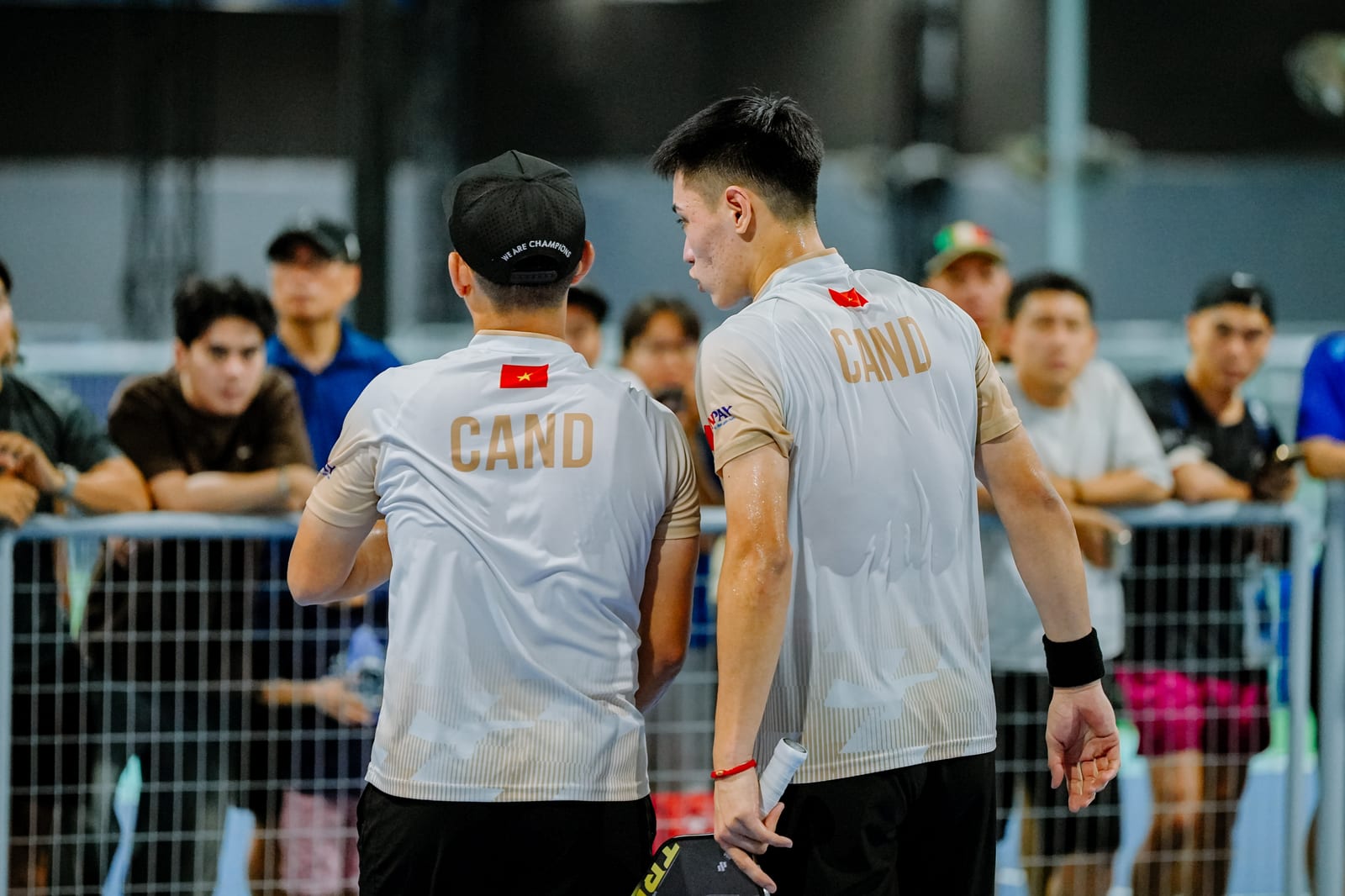 VĐV Sypik tại sân pickleball
Understanding what separates a true court shoe from a general athletic shoe is the foundation of a smart purchasing decision. Here are the technical features that matter most for pickleball performance.
Lateral Support and Ankle Stability
Pickleball's lateral movement pattern demands a shoe with reinforced midfoot structure — typically a TPU (thermoplastic polyurethane) shank or a medial post that resists the inward rolling force during side-to-side cuts. A wide, stable toe box prevents the foot from sliding inside the shoe during abrupt stops. Low-to-the-ground profiles (lower stack height) also reduce the tipping leverage that leads to ankle rolls on sudden directional changes.
Cushioning Technology
Three cushioning technologies dominate court footwear: EVA (ethylene vinyl acetate) foam is the lightest and most common, offering reliable impact absorption at lower cost. Gel systems (popularized by Asics) isolate and attenuate shock in the heel and forefoot separately, excelling at multi-directional impact management. Modern foam compounds (such as Nike's React or Adidas Bounce) offer energy return, meaning the shoe partially propels your next step. For pickleball, gel and advanced foam tend to outperform basic EVA once you exceed three hours of weekly play.
Grip and Traction
Indoor courts require non-marking soles — typically herringbone or pivot-point rubber patterns — that grip smooth hardwood without leaving scuff marks. Outdoor hard courts demand harder, more abrasion-resistant rubber compounds that can withstand textured surfaces without wearing through prematurely. The grip pattern geometry also matters: tighter patterns offer more grip on smooth surfaces; open patterns shed grit better outdoors.
Weight
The performance window for pickleball shoes sits between 8 and 11 ounces (227–312 grams) per shoe. Below 8 oz, structural stability is typically compromised. Above 11 oz, lateral quickness declines measurably. This is a narrower band than running shoe design, which commonly exceeds 12 oz for cushioning reasons.
Breathability and Moisture Management
Court sports generate sustained foot heat. Shoes with engineered mesh uppers and moisture-wicking internal liners reduce blister risk and maintain consistent fit throughout a two-hour session. Synthetic leather overlays that add structure should be strategically placed to avoid blocking ventilation zones.
Court Compatibility and Durability
Outdoor hard court shoes can typically endure 40–70 hours of play before sole degradation becomes performance-affecting. Indoor-specific shoes wear significantly faster if used outdoors. Calculating cost-per-hour of play — typically $1.50–$3.00 for a quality $120–$150 court shoe — is a more rational budget metric than upfront price alone.
---
Best Tennis Shoe Brands for Pickleball
The court tennis shoe market offers a wide spectrum of options calibrated for different playing styles and budgets. Here is a clear breakdown of the leading models and what each delivers for pickleball specifically.
Asics Gel-Dedicate & Court FF
Asics remains the gold standard for court-specific cushioning. The Gel-Dedicate series offers exceptional heel and forefoot gel placement at an accessible $65–$85 price point, making it the most popular entry-level choice among serious recreational players. The Court FF steps up with Asics' FlyteFoam midsole — a high-density foam compound that is approximately 55% lighter than standard EVA while maintaining structural integrity. For pickleball players prioritizing joint comfort over long sessions, Asics is consistently the top recommendation.
Nike Court Legacy & Air Zoom Vapor
Nike's Court Legacy prioritizes low-profile court feel with a durable herringbone sole ideal for both indoor and outdoor hard courts. The Air Zoom Vapor series is the choice for explosive athletes who value immediate responsiveness — the forefoot Zoom Air unit compresses and returns energy within milliseconds, enhancing first-step quickness from the kitchen line. Price range: $85–$140.
New Balance 796 & 806
New Balance's court line earns consistent praise for superior lateral support architecture, particularly from players with wider feet. The 806 specifically features a reinforced medial midfoot wrap that is particularly effective at containing the foot during aggressive cross-court drives. Both models come in multiple width options (D, EE, 2E), making them an ideal first stop for players who have struggled with fit from other brands. Price range: $80–$130.
Yonex Power Cushion
Yonex's Power Cushion technology was developed specifically for badminton — a sport with movement demands nearly identical to pickleball — then adapted for tennis and court sports. The layered cushioning system absorbs impact from multiple angles simultaneously, rather than just vertically. For pickleball players with recurring knee or hip discomfort, Yonex Power Cushion models frequently resolve issues that standard court shoes cannot. Price range: $100–$160.
Adidas Bounce Court
Adidas Bounce midsole technology provides measurable energy return — typically cited at 15–20% greater propulsive assist than standard EVA — which translates to slightly faster recovery footwork between shots. The Bounce Court line is competitively priced at $70–$110 and holds up particularly well on outdoor surfaces.
Trương Vinh Hiển and the Fit-First Philosophy
Champions like Trương Vinh Hiển (22-year-old professional, vô địch OB Open Pickleball Championships 2024, PPA Tour Asia doubles champion) consistently emphasize that fit outweighs brand name every time. A perfectly fitting $90 shoe from any reputable brand will outperform a $200 shoe that fits poorly. This philosophy extends to equipment selection more broadly: the SYPIK TRITON 5 PRO ULTIMATE paddle, for instance, is chosen by Sypik Champions not because of its price point but because its T700 carbon fiber face and PP honeycomb core deliver precision that rewards technically sound footwork. When your shoes allow you to reach shots reliably, your paddle's performance characteristics become fully accessible. Explore the full paddle lineup at sypik.com/paddles.
---
Indoor vs. Outdoor Pickleball Shoes
 VĐV Sypik tại sân pickleball
Surface environment is the most critical variable in shoe selection, and confusing indoor and outdoor requirements is among the most common and costly mistakes recreational players make.
Indoor Hard Court Demands
Indoor pickleball courts — whether on hardwood gymnasium floors, sport tile, or cushioned multi-use surfaces — require non-marking soles as a near-universal facility rule. The traction pattern must grip a smooth, often lightly polished surface without leaving black rubber streaks. Herringbone and pivot-dot sole geometries perform best here. Indoor courts also transfer less impact shock than outdoor asphalt, allowing shoe designers to prioritize court feel and cushioning density over abrasion resistance.
Outdoor Hard Court Demands
Outdoor surfaces are harder on shoes in every measurable way. Textured asphalt and concrete accelerate sole wear dramatically — an indoor shoe used exclusively outdoors may show significant sole degradation in as few as 15 hours. Outdoor court shoes require harder rubber compounds, reinforced toe caps, and in hotter climates, UV-resistant material treatments to prevent premature breakdown.
Clay Court Considerations
While clay court pickleball is less common in Asia and North America, it exists in European venues. Clay demands a herringbone sole with deeper grooves and greater lateral flex to allow the foot to dig slightly into the surface during cutting movements without slipping.
Sophia Huỳnh Nhi's Tournament Footwear Rotation
Sypik Champion Sophia Huỳnh Nhi (18 years old, member of 4-generation Vietnamese tennis family, vô địch đôi nữ Pickleball Mở rộng châu Á 2024, HCV đôi nam-nữ Pickleball Vô địch châu Á 2024 với Trương Vinh Hiển, vô địch đôi nam-nữ 19+ Pickleball Vô địch Quốc gia 2025) provides a practical example of intelligent footwear management. Before major tournaments, she confirms the court surface with the event organizer, then selects her footwear accordingly — indoor cushioned court shoes for gymnasium venues, more durable outdoor-rated court shoes for open-air events. She maintains a dedicated indoor pair and outdoor pair simultaneously, rotating them to extend the life of both while ensuring optimal performance on every surface. This dual-rotation strategy is recommended for any player competing three or more times per week.
---
Fit, Comfort & Sizing Tips
Correct sizing is where many players — including experienced ones — go wrong. Court shoe sizing follows different logic than casual footwear sizing, and getting it wrong leads to blisters, black toenails, and accelerated lateral instability.
Size Up Half a Size
The standard recommendation for court shoes is to purchase one half-size larger than your street shoe size. During lateral movement, the foot tends to swell slightly and slide forward inside the shoe. Without that extra space, repeated toe contact with the front of the shoe causes bruising and blisters, particularly on the dominant foot's big toe.
Width Options Matter
Not all feet fit standard D-width lasts. New Balance and Asics offer the widest selection of alternate widths, including EE and 2E options. If you find your foot pressing against the sides of standard-width shoes after 30 minutes of play, width — not length — is likely your fitting problem.
Break-In Period: First 5–10 Hours
New court shoes, even excellent ones, require a break-in period. The midsole foam needs to conform to your foot's pressure distribution, and the upper material needs to soften around your flex points. Wear new shoes for practice sessions before debuting them in competitive play. Skipping this step frequently causes blisters and altered gait mechanics during important matches.
Sock Pairing
Pair court shoes with moisture-wicking athletic socks — polyester and merino wool blends perform best. Mid-calf length prevents sock slippage and provides additional ankle friction reduction inside the shoe collar. Avoid cotton socks entirely; they retain moisture, increasing friction and blister risk exponentially during sustained play.
Testing and Returns
When possible, try court shoes on a hard floor, not carpet. Simulate lateral shuffles in-store. For online purchases, verify the retailer's return policy before ordering — many major retailers offer 30-day court-trial return windows specifically for athletic footwear.
---
How Professional Pickleball Players Choose Their Shoes
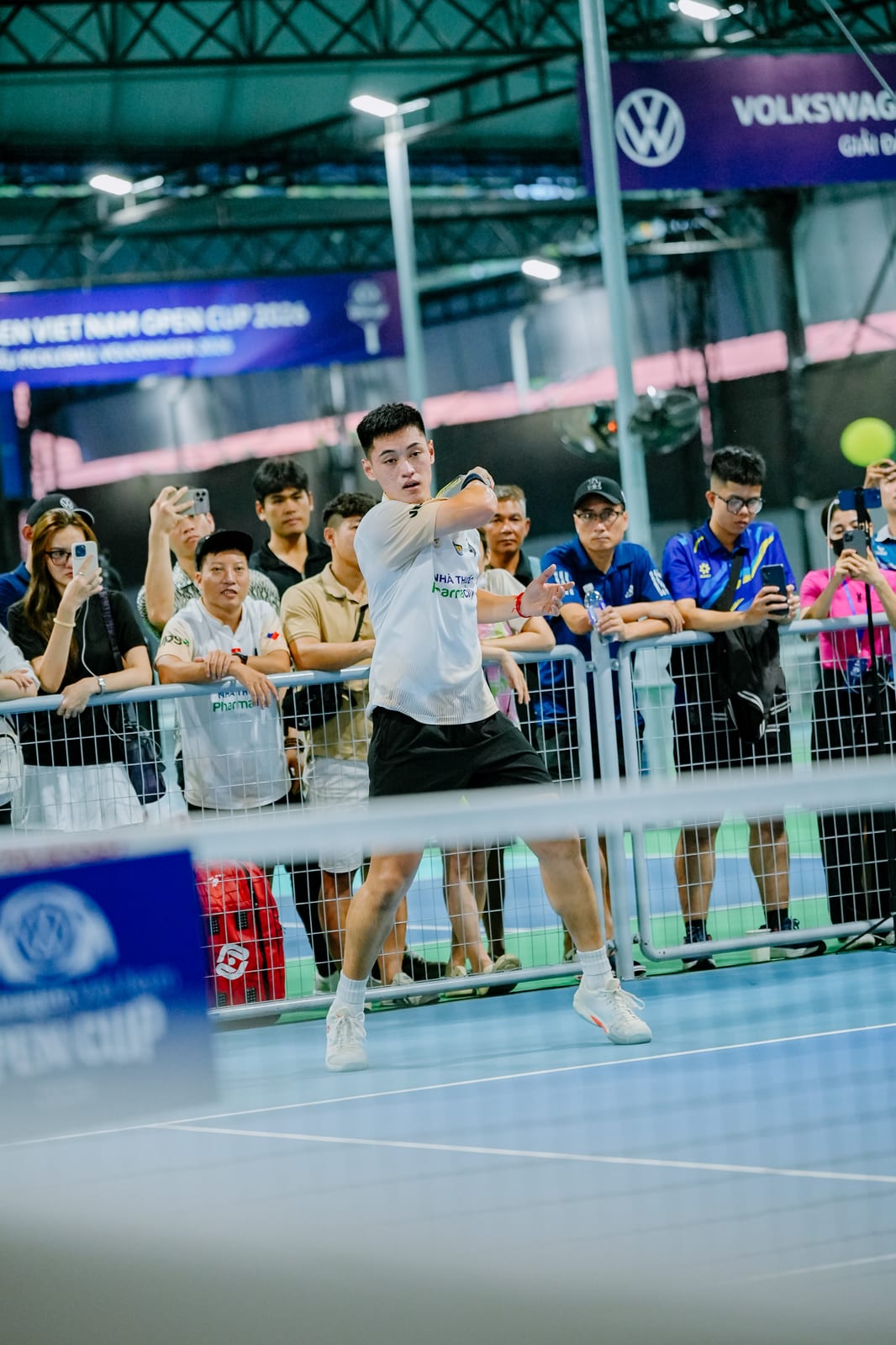 VĐV Sypik tại sân pickleball
The shoe selection process among professional pickleball players is considerably more methodical than most recreational players realize. Understanding how pros approach this decision can sharpen your own purchasing logic.
Đỗ Minh Quân's Selection Process
Sypik Champion Đỗ Minh Quân (42 years old, huyền thoại quần vợt Việt Nam, 10 lần vô địch quốc gia đơn nam tennis VN, tay vợt #1 VN với thời gian giữ ngôi dài nhất lịch sử, du học Mỹ lấy bằng huấn luyện viên, chuyển sang pickleball 2021, vô địch đôi nam PPA Tour Asia 2025 với Trương Vinh Hiển) approaches shoe selection as a technical evaluation, not a brand preference exercise. His process begins with surface analysis — he identifies the dominant court surface for the upcoming tournament circuit, then narrows candidates to shoes with verified performance on that surface. He then evaluates three mechanical criteria in order: lateral containment (does the midfoot structure prevent any inward roll during hard cuts?), cushioning consistency (does the midsole maintain its properties after 60 minutes of continuous play?), and sole grip durability (does traction degrade measurably as the sole heats up?).
Lateral Stability Over Brand Loyalty
Across the Sypik Champions roster, the consistent theme in footwear discussion is that lateral stability — the shoe's ability to keep the foot properly aligned during side-to-side movement — matters more than any other single attribute. Brand loyalty is irrelevant if the structural architecture of a shoe doesn't match the athlete's movement pattern and foot geometry.
Sponsorship vs. Personal Preference
Professional athletes sometimes face sponsored footwear arrangements. When a sponsored shoe aligns well with a player's physical requirements, the arrangement is beneficial. When it doesn't, most serious pros maintain a clear-eyed separation between endorsement commitments and competition footwear, particularly for major tournament play where a misstep due to poor footwear can have career-affecting consequences.
Shoe Lifespan in Pro Play
At the professional level, competitive pickleball shoes last an average of 40–60 hours of active court time before performance-affecting degradation occurs. For a pro training and competing five days per week, this means replacing shoes approximately every two to three months. This rapid cycle is why pros prioritize value-for-performance over premium pricing — a $130 shoe that performs optimally for 55 hours outperforms a $240 shoe that degrades at 40 hours.
Total Court Ecosystem
The Sypik Champions approach footwear as one component of a complete court ecosystem — paddle technology, footwear stability, and athletic apparel working together rather than independently. See how the full champion roster integrates their gear at sypik.com/champions. When your shoes allow you to plant and push laterally with full confidence, the spin control and power precision of a paddle like the SYPIK TRITON 5 PRO ULTIMATE becomes far more accessible — because your body can actually execute the technique the paddle rewards.
---
Maintenance & Lifespan of Pickleball Tennis Shoes
Extending the effective lifespan of court shoes requires consistent, simple maintenance. Most players underinvest here and replace shoes more frequently than necessary — or worse, continue playing on degraded shoes that no longer provide adequate support.
Cleaning Protocol
After each session, remove loose surface debris with a soft-bristle brush. For deeper cleaning, use a mild soap solution applied with a damp cloth, working in small circular motions across the upper and sole. Never machine wash court shoes — the agitation cycle damages midsole foam structure and separates adhesive bonds between the upper and sole. Air dry only, away from direct sunlight or heat sources. UV and heat exposure accelerate rubber hardening and foam compression set.
Storage
Store shoes in a cool, dry environment with the tongues pulled forward to maintain shape. Cedar shoe trees help absorb residual moisture and preserve the internal structure between sessions.
Performance Degradation Signs
The two critical signals that replacement is needed: visible flattening of the midsole underfoot (indicating cushioning foam compression set) and any wobble or give when pressing the midfoot laterally (indicating lateral support structure failure). Visual sole wear alone is not a reliable indicator — the structural components often fail before the sole is visually worn through.
Environmental Impact
Several major brands — including Asics, Nike, and New Balance — operate shoe recycling programs that accept worn court shoes and repurpose the materials into sports surfaces and insulation. This is worth investigating when replacing your footwear.
---
Common Mistakes When Choosing Pickleball Shoes
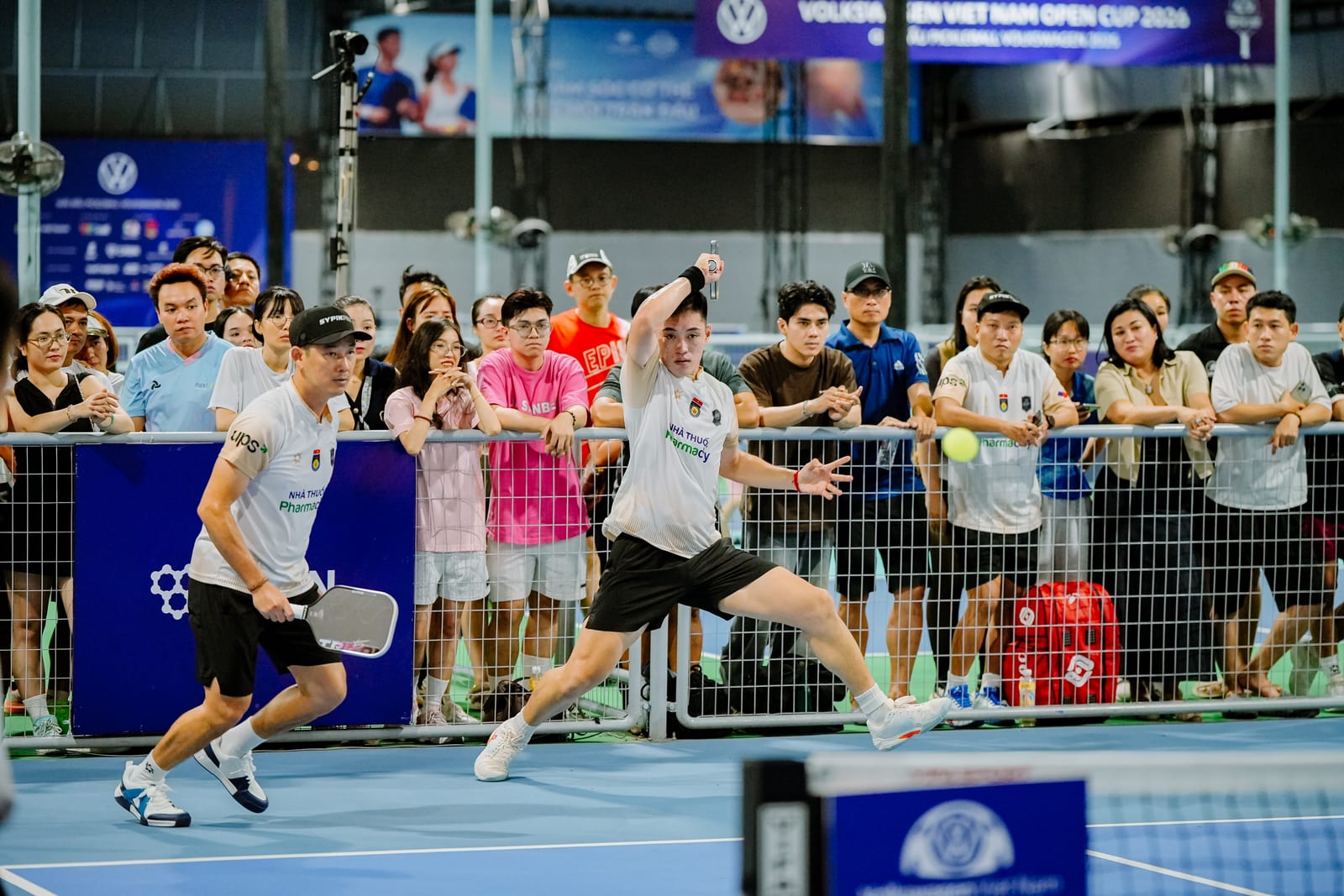 VĐV Sypik tại sân pickleball
Even experienced players make predictable errors when selecting court footwear. Identifying these patterns can save you money, prevent injury, and immediately improve your on-court performance.
Buying Running Shoes Instead of Court Shoes
This is the most prevalent mistake in recreational pickleball. Running shoes are engineered for forward linear motion with maximum heel cushioning and flexible lateral walls. These exact characteristics become liabilities on the court — soft lateral walls allow ankle rollover during cutting movements, and elevated heel stack heights increase tipping leverage. Running shoes offer zero protection for the lateral stress patterns that define pickleball movement.
Ignoring Grip Requirements
Players who transition from outdoor to indoor courts wearing outdoor-specific shoes frequently experience unexpected slipping on smooth gym floors. The inverse — using indoor non-marking soles outdoors — accelerates sole wear dramatically. Always confirm your shoe's surface compatibility before the session begins.
Prioritizing Aesthetics Over Function
Court shoe design has become genuinely attractive, which unfortunately makes it easier to justify purchasing shoes for visual appeal rather than structural performance. Color and silhouette are irrelevant to lateral support architecture.
Skipping the Break-In Period
Wearing brand-new shoes to a competitive match is a well-documented path to blisters and altered mechanics. Budget five to ten practice hours before competitive deployment.
Not Rotating Shoes
Playing exclusively in one pair seven days a week compresses midsole foam without adequate recovery time between sessions. Rotating two pairs extends total lifespan by 30–40% and maintains more consistent cushioning performance.
---
Tennis Shoes & Your Pickleball Game: Putting It All Together
Footwear rarely gets the attention it deserves in pickleball development conversations, but the evidence — from injury data, professional player testimony, and biomechanical research — consistently points to the same conclusion: tennis shoes and court footwear account for approximately 20% of on-court performance outcomes. The remaining factors break down roughly as follows: technique (40%), paddle selection (30%), and physical conditioning (10%). Neglecting the 20% that footwear contributes leaves real improvement on the table.
Your Action Checklist
1. Identify your primary court surface (indoor hard, outdoor hard, or clay)
2. Test at least two models in-store with lateral shuffle simulation
3. Prioritize lateral containment and midfoot stability above all other features
4. Size up half a size and pair with moisture-wicking athletic socks
5. Budget for replacement every 40–60 hours of active court time
6. Rotate two pairs if you play three or more times per week
Complete the Ecosystem
Once your footwear is dialed in, the next performance lever is paddle technology. The SYPIK TRITON 5 PRO ULTIMATE — built with T700 carbon fiber and a PP honeycomb core and trusted by Asia's top champions — rewards exactly the stable, confident footwork that quality court shoes enable. Explore the full collection at sypik.com/paddles.
With your court foundation established through the right shoes and the right paddle, the final layer is training with intention. The Sypik Champions provide a model for how equipment selection, technique refinement, and competitive preparation integrate into a coherent performance system. For premium apparel and accessories that complete your court setup — including the Áo Sypik Pro Tour, Mũ Sypik Pro, and Balo Sypik Pro Tour — visit sypik.com/gear.
---
Frequently Asked Questions
Q: Can I wear running shoes for pickleball?
Running shoes are not recommended for pickleball. They are engineered for forward linear movement with soft, flexible lateral walls that provide no resistance against ankle rollover during side-to-side cuts. They also typically lack non-marking soles required on indoor courts. Court shoes with reinforced midfoot structure, stable lateral walls, and surface-appropriate grip patterns are the correct choice and significantly reduce ankle sprain risk.
Q: What's the ideal weight for pickleball shoes?
The performance window for pickleball court shoes is 8–11 ounces (227–312 grams) per shoe. Shoes under 8 oz typically sacrifice the structural stability required for safe lateral movement. Shoes over 11 oz add unnecessary mass that slows the lateral quickness required for kitchen line play and split-step recovery. Most quality court tennis shoes from Asics, Nike, New Balance, and Yonex fall within this range by design.
Q: Do expensive tennis shoes perform better for pickleball?
Price correlates with technology and durability, but not necessarily with fit or biomechanical suitability for your specific foot. A well-fitting $80–$150 quality court shoe from a reputable brand will outperform a $250 running shoe or fashion sneaker every time on a pickleball court. Test fit and lateral containment before price. Within the quality court shoe category, higher prices generally reflect better cushioning technology and longer sole lifespan, which improves cost-per-hour value for frequent players.
Q: How often should I replace pickleball shoes?
Replace court shoes every 40–60 hours of active play. For players competing three times per week at approximately 90 minutes per session, this translates to roughly three to six months. The two primary replacement indicators are midsole flattening — visible compression underfoot when the shoe is unoccupied — and lateral collapse, detectable as wobble or give when pressing the midfoot sideways. Do not wait for visible sole wear-through; structural failure consistently precedes surface wear.
Q: What's the difference between hard court and clay court pickleball shoes?
Hard court pickleball shoes (models from Asics, Nike, New Balance) prioritize impact cushioning, non-marking grip, and durable rubber compounds that resist abrasion on concrete and asphalt. Clay court pickleball shoes feature a herringbone sole with deeper grooves designed to bite into the softer clay surface during lateral cuts, along with greater forefoot flex to accommodate the sliding mechanics that clay naturally encourages. Using hard court shoes on clay typically results in slipping; using clay shoes on hard courts accelerates sole degradation rapidly.
Q: Should I buy the same shoe brand as my paddle?
No. Paddle and footwear are entirely independent selections optimized for different performance criteria. Choose your paddle based on playing style, spin preference, and power requirements — the SYPIK TRITON 5 PRO ULTIMATE is a strong choice for intermediate-to-advanced players seeking a carbon fiber edge in ball control. Choose your shoes based on foot geometry, court surface, and lateral stability requirements. The best combination is whatever delivers optimal fit in your shoes and optimal control in your paddle, regardless of brand alignment.
Q: What socks should I wear with pickleball shoes?
Wear moisture-wicking athletic socks in polyester or polyester-merino wool blends, mid-calf height. These materials actively move moisture away from the skin, maintain consistent friction against the shoe liner, and keep foot temperature regulated during sustained court sessions. Mid-calf length prevents sock slippage inside the shoe collar during lateral movements. Avoid cotton socks entirely — cotton absorbs and retains moisture, dramatically increasing blister-causing friction as your session progresses.
Q: Can I use indoor tennis shoes for outdoor pickleball?
Indoor court shoe soles are designed for smooth, controlled surfaces and wear significantly faster on the abrasive texture of outdoor concrete or asphalt. Using indoor shoes outdoors will typically degrade the sole within 15–20 hours, compared to 40–60 hours for outdoor-rated court shoes. If you play on both surfaces regularly, maintain dedicated pairs for each — or select a dual-rated outdoor court shoe explicitly tested for multi-surface use, which several brands including Asics and New Balance now offer.
---
Footwear is the foundation. Once your court shoes are right, every other technical investment — from paddle technology to shot selection — performs closer to its true ceiling.
Related Articles

Lưới Pickleball: Hướng Dẫn Chọn & Tiêu Chuẩn Quốc Tế 2026
Hướng dẫn chi tiết lưới pickleball chuẩn ITPF: kích thước, chất liệu, cách lắp đặt và bảo trì. Dùng cho sân thi đấu, giải trí — đánh giá từ Sypik.

Túi Pickleball: Hướng Dẫn Chọn & So Sánh Gear Pro 2025
Hướng dẫn chi tiết cách chọn túi pickleball phù hợp: kích thước, chất liệu, brand top. Đánh giá từ Champions Sypik kèm bảo hành NFC 6 tháng.

Giải Pickleball 2026: Hướng dẫn Toàn Diện Các Giải Đấu Lớn Thế Giới & Việt Nam
Hướng dẫn chi tiết giải pickleball lớn nhất 2026: từ US Open, APP Tour, PPA đến giải Pickleball Việt Nam. Lịch thi đấu, quy tắc & cách tham gia.

Pickleball Ball: Hướng dẫn chọn bóng phù hợp cho mọi tay vợt
Tìm hiểu chi tiết về bóng pickleball: tiêu chuẩn ITPF, sự khác biệt trong nhà vs ngoài trời, cách chọn bóng phù hợp. Lỏng hơn tennis, điều khiển dễ hơn.